Table of Contents
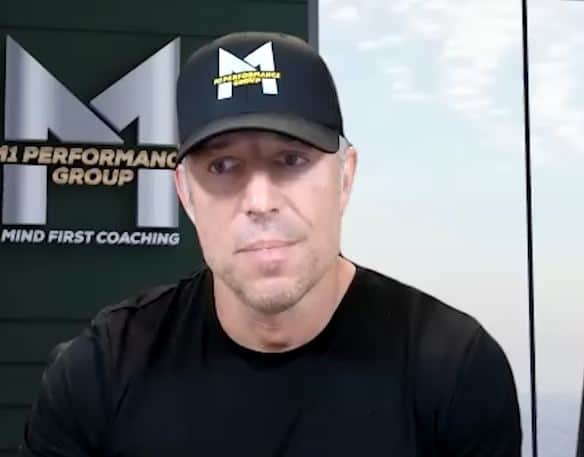
This interview features Evan Marks—founder of M1 Performance Group and a veteran Wall Street money manager turned mental-performance coach—digging into the psychology that separates good traders from great ones. From his “performance = potential − interferences” framework to the difference between impulsivity and intuition, Evan shows how elite decision-making is trained, not gifted, and why “aggressive patience” is the mindset edge you can actually practice.



In this piece, you’ll learn how to build a mental foundation that turns emotions into data, shrinks the gap between feeling and conscious response, and helps you reset fast after losses without going on tilt. We’ll walk through Evan’s practical drills for downregulating under pressure, scaling size by stretching (not snapping) your risk tolerance, and using daily resets plus deliberate self-talk to keep your edge sharp when uncertainty spikes.


















Evan Marks Playbook & Strategy: How He Actually Trades
Mental Foundation: Performance = Potential − Interference
Before anything else, Evan builds a mental base that shrinks the gap between what you can do and what you actually do under pressure. This section lays out simple rules to turn feelings into signals and force good behavior when markets speed up.
- Define your edge behaviorally: write the 3 actions that constitute “A-game” execution (setup recognition, entry discipline, risk cut). Review before the session.
- Run a 60-second check-in every hour: “What am I feeling? What’s the data? What behavior serves the plan?” Then act—don’t ruminate.
- Use a 3-step loop on every decision: Feel → Choose → Execute. If you can’t name the feeling in one sentence, you don’t execute.
- Ban reaction trades: any trade placed within 90 seconds of a spike or a stop-out requires a second confirmation signal, or it’s skipped.
- Track interference: log the top 3 triggers (FOMO, revenge, hesitation) and the counter-behavior for each; rehearse counter-behavior pre-market.
Aggressive Patience: Hunt, Don’t Chase
Evan’s trademark phrase is about being coiled, not passive—ready to strike only when conditions align. The bullets below make patience measurable so you can be fast without being frantic.
- Pre-commit to a maximum of 3 trades per session unless you’re up >1R; if below, you may add +1 only when A-setup returns.
- Use a 10-minute cool-down after any loss >1R; during cool-down, you may manage open risk but cannot add exposure.
- Run a 2-signal rule on entries: structure + timing (e.g., level + tape/trigger). One without the other is observation, not action.
- Create a Ready List of 3 symbols/setups before the open; if it’s not on the list, you need an A++ reason to engage or you pass.
- If price is “almost there,” it isn’t there: set alerts beyond the level you want (e.g., break + retest) so you don’t front-run your own plan.
Respond > React: Emotions Are Data.
Evan treats emotions like market prints—useful inputs, not commands. This is how you keep feelings on the sideline while decisions stay on the field.

- Label in real time: “This is anxiety/greed/frustration” → one breath → one action aligned with plan. No label, no trade.
- Install a 2-strike rule: two consecutive impulse deviations (chasing, canceling stops, adding to losers) = flat, platform closed for 30 minutes.
- Replace “don’t be nervous” with if-then scripts: “If I feel rushy after a big candle, then I wait for the candle close + confirm on next bar.”
- Pre-write loss language: “I took the loss correctly; my job is to execute the next clean setup.” Read it aloud after any stop.
- Keep a Decision PnL: +1 for following process, −1 for breaking it, separate from money PnL; you’re only allowed to scale size when Decision PnL ≥ +8 over 10 sessions.
Daily Reset & Downregulation
Great days and bad days both distort judgment. Evan hard-resets to neutral, so tomorrow isn’t contaminated by today.
- End-of-day reset: write 3 lines—“Kept,” “Cut,” “Change”—then visualize tomorrow’s open executing those exact behaviors.
- Post-loss body reset (2 minutes): inhale 4s, hold 2s, exhale 6s, hold 2s × 10 cycles; stand, walk 60 steps, return only if breath is steady.
- Start-of-day priming (3 minutes): read rules aloud, visualize one adverse scenario and your correct response, then one base-hit scenario and your correct exit.
- Green-day guardrail: if up ≥2R by midday, halve size or halve frequency for the afternoon—protect the mental edge.
- Night audit: no charts 60 minutes before bed; journal one sentence: “When X happened, I chose Y; tomorrow I’ll choose Z faster.”
Position Sizing by “Stretching”
Scaling is earned, not declared. Evan “stretches” size only when the downside response is stable and the process score is strong.
- Define a drawdown tolerance in R (e.g., 5R). If breached intra-week, revert to base size until you post two green process days.
- Size ladder: hold base size for 10 sessions with Decision PnL ≥ +8 → increase +25%; maintain for 10 more sessions → another +25%.
- Stress test before size-up: simulate two consecutive 1.5R losses at the new size; if you can’t calmly outline the correct next trade, delay the increase.
- Stretch only on A-setups: size increases apply only to predefined A-quality patterns; B/C setups remain at base or are skipped.
- De-stretch fast: any emotional deviation after size-up (moving stops, revenge) = immediate return to prior size for the next 5 sessions.
Pressure Calibration & Speed of Decision
Trading compresses every emotion into minutes. Evan trains for speed without panic, so your fast choices are still good choices.
- Know your pressure zone: rate sessions 1–5 for pressure; if ≥4, switch to “conservative mode” (one entry attempt per setup, no adds).
- Install time fences: no entry in the first 2 minutes after an alert; no exit change within 30 seconds of placing it unless a hard invalidation prints.
- Use one-breath checks at inflection: inhale, tag the scenario (breakout, fade, failed breakout), confirm plan step, execute, or pass.
- Limit data load: maximum 2 timeframes + 1 trigger (e.g., 1H context / 5M structure / 1M trigger). Anything more invites noise.
- Record speed reps: once per day, replay a fast tape segment and practice calling your rule out loud before clicking.
Preparation: Morning, During, After
Evan’s edge lives in routine—predictable inputs that create consistent outputs. Here’s the skeleton to copy.
- Morning (15 minutes): mark levels, pre-write if-then scripts for two adverse and two favorable paths, choose a single A-setup per symbol.
- During: run the hourly check-in, cap screens to planned symbols, and maintain a visible R-tracker (risk per trade, risk left today).
- After: export fills, screenshot entries/exits, annotate with “setup/trigger/management,” and list one micro-change for tomorrow.
- Health pillars: 7+ hours sleep, 20+ minutes movement, hydration at desk; if any pillar is missing, cap risk to 0.5R per trade that day.
- Weekly review: tag 10 trades by behavior (A-clean, B-late, C-impulse). Delete one behavior next week by installing a single counter-rule.
Goals as Stacking Behaviors
Instead of chasing lofty outcomes, Evan stacks small wins that can’t be skipped. These rules make progress automatic.
- Replace outcome goals with input contracts: “5 clean entries this week,” “no stop moves,” “journal within 15 minutes of close.”
- Use a 3×3 grid: 3 behaviors × 3 weeks; you can’t add a new behavior until all 3 score ≥80% adherence for the week.
- Tie size to behavior, not P&L: no scale-up unless adherence ≥80% for 2 consecutive weeks, even if P&L is up.
- Build a “proof list”: keep a running count of days you kept the contract; lack of proof means no permission to push risk.
- Celebrate process: one small reward (walk, call, coffee) when a weekly contract is met; no trading-related reward on outcome alone.
Intuition Training & Reps
Evan treats intuition as compressed experience—the product of labeled, repeated reps. This is how you grow it on purpose.
- Daily 10-chart drill: flash through 10 historical moments; for each, call the setup, invalidation, and management in 10 seconds.
- One blind replay per week: trade an unseen session bar-by-bar; only advance the chart after making and logging the decision.
- Build a pattern library: 20 screenshots per setup with notes on context, trigger, invalidation, management; review before the open.
- “Feel to field” rule: if you feel urgency or fear, you must label it and state the rule aloud before clicking, or you skip the trade.
- Tighten the loop: reduce the time from feeling → label → rule → action to under 15 seconds through timed practice.
Self-Talk Scripts That Stick
Language drives state; state drives execution. Evan uses simple scripts you can memorize and deploy at the right moments.
- Pre-trade: “I’m calm, I’m clear, I execute my rule or I pass.”
- Post-loss: “Loss taken correctly; my job is the next clean setup.”
- During run-up: “Base hits compound; manage the plan, not the P&L.”
- During stall: “No new info = no new action; protect mental capital.”
- Pre-close: “Reset to zero; tomorrow I repeat what works.”
Aggressive Patience: Enter Late, Size Right, Let Winners Breathe
Evan Marks calls it “aggressive patience” because you’re coiled, not passive—waiting for the cleanest read and then striking with intent. Entering late means you demand structure plus trigger: the level is tested, the retest holds, and your invalidation is obvious before you click. By letting the first move go, you avoid the adrenaline trade and buy yourself clarity on where you’re wrong. Evan emphasizes naming the feeling—FOMO, rush, frustration—so you act on rules rather than urges.
Sizing right starts with volatility: when the range expands, you cut unit size and keep risk per trade constant; when it compresses, you allow a normal unit. He teaches trailing the stop behind structure—not ticks—so winners have air and losers get cut fast. If momentum stalls or invalidation prints, you’re out; if it runs, you scale only on fresh structure, never mid-whip. The net effect of Evan Marks’ approach is fewer but cleaner trades that compound through discipline, not prediction.
Volatility-Based Allocation: Stretch Size On A-Setups, Shrink On Noise
Evan Marks frames position sizing as a living response to volatility, not a static preference. When the tape widens and ATR jumps, he reduces unit size so the dollar risk per trade stays constant while stop distance breathes. When volatility contracts and structure are clean, he returns to standard units and looks to stretch only on A-setups he has rehearsed. He’s explicit that the stretch is earned by process metrics—clean entries, held stops, documented exits—not by a hot streak.
On execution, Evan Marks ties size to structure quality: break-and-retest with confirmation earns normal or plus size; messy, mid-range chop gets half-size or no trade. He scales only on fresh structure after partials, never into uncertainty, just because P&L is green. If dispersion spikes mid-trade, he pares back to base risk and lets the original stop work, avoiding death by micromanagement. The whole point is to let volatility dictate breathing room while your risk stays fixed, so expectancy compounds without blowups.
Mechanics Over Prediction: Two-Signal Confirmation, Predefined Invalidation, Immediate Reset
Evan Marks keeps the edge mechanical, so emotions don’t run the show. He wants two independent confirmations before entry—structure plus timing—so you’re acting on evidence, not hope. Predefine invalidation at a price level that kills the idea, not at a random round number. If the level breaks and closes, the trade is over; there’s no “let’s just see” in Evan’s world.
He also drills the immediate reset: after a stop, breathe, label the feeling, and return to the checklist before touching the mouse. If the next bar doesn’t rebuild your two signals, you observe, period. Trade management follows the same script—scale on fresh structure only and trail behind proven pivots, not noise. By forcing these mechanics, Evan Marks turns what most traders treat as opinions into a repeatable execution loop.
Diversify By Playbook: Underlying, Strategy, and Duration To Smooth P&L
Evan Marks frames diversification as a behavior, not a watchlist. He splits risk across uncorrelated underlyings, complementary strategies, and mixed holding periods so one bad patch doesn’t sink the week. That means pairing trend and mean-reversion, breakout and fade, intraday and swing—each with its own rules, triggers, and risk caps. Evan insists every playbook slot has a max allocation and a clear “off switch” when its edge goes cold.
He staggers entries so correlated names don’t fire at once and caps total exposure by theme or factor. Duration is purposeful: quick intraday trades harvest base hits while swing positions hunt the fat tail, each sized by volatility and independence. If a regime shift shows up—range expansion, factor rotation—Evan rotates toward the playbooks that historically perform, instead of forcing yesterday’s edge. The outcome is a steadier equity curve powered by structure and selection, not prediction or hope.
Process Discipline: Decision P&L, Cool-Downs, and Strict Daily Guardrails
Evan Marks treats discipline like a system, not a mood, and he measures it with a separate Decision P&L that scores execution independent of dollars. Follow the rule, you score; break the rule, you dock yourself—even if the trade made money. That single metric decides whether you can scale size next week, which keeps ego out of it. When tilt creeps in, Evan triggers a timed cool-down to reset breathing, posture, and plan before a single new click.
Daily guardrails make overtrading expensive and clean behavior cheap. He caps attempts per setup, locks in no-trade windows after outsized losses, and requires a pre-close reset so tomorrow starts neutral. Reviews are short and sharp: what to keep, what to cut, what to change, then shut it down. The goal, in Evan Marks’ words and practice, is to leave the desk with your edge intact, so compounding comes from consistency—not from chasing.
In the end, Evan Marks’ edge is built on “aggressive patience”—staying coiled until structure and timing align—paired with a clean mental model: performance equals potential minus interference. He treats emotions as data, not orders; label the feeling, choose the behavior, execute the plan. That means waiting for the retest instead of chasing the first spike, defining invalidation before clicking, and cutting reaction trades that creep in after volatility shocks. It’s a practical synthesis: the jaguar-in-the-brush mindset, a simple performance equation, and a daily habit of downregulating so decisions outrun impulses.
When confidence wobbles, he doesn’t swing bigger; he visualizes optimal execution, stacks small behavioral wins, and rebuilds momentum one correct action at a time—because “making it all back on one thing” isn’t a strategy. The through-line is simple and hard: shrink interference, keep rules mechanical, and use resets to protect tomorrow’s edge. For traders, the takeaway is clear—master the state, simplify the triggers, and let the process compound.

He is an expert in financial niche, long-term trading, and weekly technical levels.
The primary field of Igor's research is the application of machine learning in algorithmic trading.
Education: Computer Engineering and Ph.D. in machine learning.
Igor regularly publishes trading-related videos on the Fxigor Youtube channel.
To contact Igor write on:
igor@forex.in.rs
Related posts:
- Relentless Trader Strategy: How Ahmed Ben Chaibah Turns Pressure Into Performance
- Trader Strategy Spotlight: Trader Nick on Building Real, Steady Edges
- Trader Mindset Meets Market Edge: Rob Lipsett’s Strategy Every Trader Can Steal
- Trader Strategy Playbook: James Bentley’s Keep-It-Simple Approach for the Everyday Trader
- Trader Strategy Playbook: Ross Maxwell on Edge, Risk, and Scaling as a Trader
- Trader Strategy Playbook: How a World Cup Futures Trader Finds Edge Over Wall Street
- Crypto Trader Strategy: How “Trader Mayne” Navigates Bull Markets Without Losing His Edge
- Blayn Marshall Trader Strategy: How a Funded Algo Trader Builds Durable Portfolios
- Swing Trader Strategy: How a Futures Trader Levels Up at FX Summit
- Trader Strategy Lessons from a Creator Operator Every Trader Should Study
- Trader Strategy Secrets with Larry Williams: How a World-Record Trader Thinks About Risk, Drawdowns, and Edge
- All-Female Trader Strategy Roundtable: Lessons, Mindset, and Strategy from Miami