Table of Contents
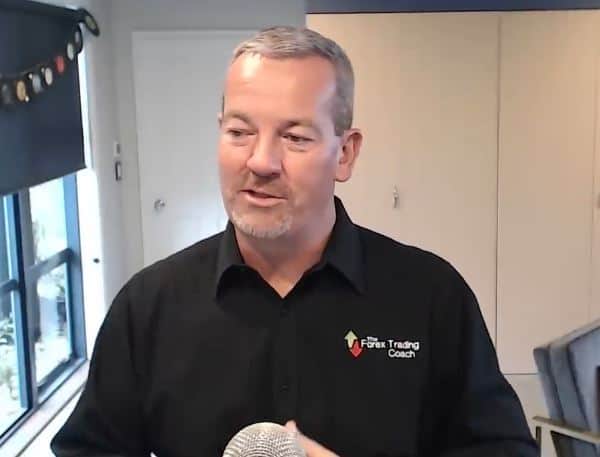
Andrew Mitchem sits down with host Etienne to unpack how he’s sustained a full-time trading career from his base in New Zealand—while flying helicopters and keeping chart time to roughly 30 minutes, twice a day. In this interview, Andrew explains why his price-action approach hasn’t changed in over a decade, how he uses MetaTrader 5, and why consistency beats chasing market “newness.” If you’re a beginner or a curious intermediate trader, this is a clear window into a durable, real-world process.



You’ll learn the core of Andrew’s strategy: reading candles on their close across multiple timeframes (including 6h/8h/12h), aligning bigger-picture bias, and aiming for logical targets like the 161.8 Fibonacci extension while keeping every trade at the same predefined risk. We’ll cover how he scans at the New York close, sizes positions so a two-hour setup and a daily setup carry equal risk, manages correlation when several JPY pairs light up at once, and keeps emotions out by letting patterns—not screen time—dictate entries. The payoff for you: a clean framework you can start modeling today, one that emphasizes longevity, selectivity, and controlled compounding rather than hype.


















Andrew Mitchem Playbook & Strategy: How He Actually Trades
Core Philosophy: Price Action First, Everything Else Second
This is the backbone of how Andrew operates: read the candles, wait for the close, and trade what you see—not what you hope. The goal is simple consistency that compounds, not constant tinkering or screen-watching.
- Trade only clear, closed-candle signals; never pre-empt an unclosed bar.
- Favor clean price action: pin bars, engulfing bars, and strong rejection wicks at obvious levels.
- Only act when a setup is obvious on the chart in under 10 seconds; if you need to convince yourself, skip it.
- Keep risk fixed per trade (e.g., 0.5%–1.0%) regardless of timeframe or pair.
- Accept that missing trades are part of the edge; protect mental capital by doing less, better.
Market & Timeframes: Multi-TF Alignment With Off-Peak Screen Time
Andrew builds a big-picture bias on higher timeframes, then times entries on mid-timeframes. He keeps the schedule light—think two quick sessions per day—so the process is sustainable long-term.
- Form bias on Daily and 12H/8H/6H charts; look for structure, momentum, and recent swings.
- Hunt entries on 12H/8H/6H (and 4H if needed) in the bias direction; ignore noise below 1H.
- Do main scans around the New York close and one mid-session check; total screen time ~30–45 minutes.
- If the higher timeframes are choppy or mixed, stand down; clarity is non-negotiable.
- Keep a “do nothing” rule when the higher timeframe candle is mid-range and indecisive.
Levels & Confluence: Let the Chart Tell You Where Price Cares
Trade from places on the chart where the price has recently reacted and where multiple factors converge. Confluence stacks the odds without overcomplicating the chart.

- Mark swing highs/lows, clean horizontal S/R, round numbers, and well-tested trendlines.
- Favor setups that touch prior S/R and leave strong rejection wicks or engulfing bodies.
- Add simple confluence only: structure + candle pattern + clear room to target.
- Avoid clutter (too many indicators); if a level isn’t obvious zoomed out, don’t trade it.
- If the level breaks cleanly and closes beyond, flip bias only after a valid counter-signal appears.
Entries: Closed-Candle Triggers You Can Execute Systematically
The edge comes from waiting for confirmation and placing orders where the market must prove you wrong quickly. No guessing, no chasing.
- Use market or stop orders on the new candle after a confirmed signal close.
- For pin bars: enter beyond the pin’s nose; stop goes beyond the tail + a small buffer.
- For engulfing bars: enter in the direction of the engulf; stop beyond the engulf range.
- Never “improve” an entry inside the signal candle’s range; that’s how you get chopped.
- Skip signals that trigger into immediate traffic (nearby highs/lows or congested wicks).
Risk & Sizing: Every Trade, Same Dollar Risk
Fixed fractional risk is how Andrew keeps the math clean and the emotions quiet. Big or small timeframe, the cash at risk is identical.
- Pre-define risk per trade (0.5%–1.0% typical); never exceed the cap.
- Position size by stop distance so the cash risk equals your fixed % every time.
- If spread or slippage expands beyond normal, reduce the size to keep the same cash risk.
- No martingale, no “confidence” bumping; conviction does not change the risk.
- Limit total open risk at once (e.g., max 2%–3% across all positions).
Correlation Control: Don’t Let One Theme Dominate Your Book
When one currency or theme moves, several pairs can light up at once. Cap exposure so a single idea can’t ruin your week.
- Treat same-currency pairs as one theme; take the single best setup from the cluster.
- Hard-cap simultaneous correlated trades (e.g., max 2 positions with JPY exposure).
- If you’re already long one theme, you require a higher-quality signal to add a second.
- Reduce the size of the second correlated position so the total book risk stays within limits.
- Close the laggard if both are open and one stalls while the other runs.
Targets & Exits: Logical Profits, No Heroics
Andrew uses simple, visual targets that price frequently respects. Let the trade pay you without demanding perfection.
- Default to structure-based targets: recent swing highs/lows and clean ranges.
- For extensions, use common Fibonacci projections (e.g., 1.272 / 1.618) only when space is clear.
- Move stop to breakeven only after the move clears the first trouble area by a full bar close.
- Trail behind higher-low/lower-high steps on the signal timeframe if momentum is obvious.
- If a candle prints a strong opposing signal at your level, take the win and re-assess.
Trade Management: Rules That Reduce Second-Guessing
The best management plan is the one you can follow on autopilot. Decide in advance what you’ll do when the price moves, stalls, or flips.
- Pre-write “if-then” rules: if price tags FTA (first trouble area) and rejects, scale 50% out.
- If momentum accelerates, keep your hands off and let the trailing logic do the work.
- If price chops for 2–3 candles after entry without progress, consider a scratch exit.
- Never widen stops after entry; either scratch, partial, or accept the loss.
- Log every deviation from plan in your journal with a reason and a screenshot.
News & Volatility: Pick Your Battles
Scheduled news can create slippage and random spikes that ignore your levels. Either stand aside or adapt size/placement.
- Check the major calendar once per day; avoid new trades right before tier-1 events on the pair.
- If already in a trade when news hits, pre-decide: full hold, partial, or scratch if structure breaks.
- In abnormal spreads or low-liquidity holidays, cut size by half or skip entirely.
- Skip signals that require threading entries through news candles.
- Re-enter only on a fresh post-news signal, not on the original plan.
Routine & Tools: Keep It Simple, Keep It Repeatable
Andrew’s edge is as much about routine as it is about charts. Short, consistent sessions beat marathon monitoring.
- Two daily scans: around the New York close and one mid-session check; set alerts for your levels.
- Use one platform layout with minimal indicators and saved templates for fast markup.
- Maintain a “watchlist first” habit: write the pairs and bias before you open the charts.
- Pre-stage orders with OCO (one-cancels-other) where possible to avoid impulse clicks.
- Archive marked-up charts into folders by week for fast pattern recall.
Journal & Metrics: Make Your Edge Visible
What gets measured gets improved. The goal is to see which signals and contexts actually pay you.
- Track setup type, timeframe, confluence factors, R multiple achieved, and time in trade.
- Tag correlation, session, and news proximity to spot hidden performance drains.
- Review weekly: cull the lowest-performing pattern and double down on the best.
- Keep a “Playbook Shortlist” of your top two signals with image examples.
- Record one improvement rule per week and enforce it on all new trades.
Psychology & Discipline: Fewer, Better, Colder
The method works because it removes heat from decisions. Your job is to guard that cold execution.
- Hard rule: no revenge trades, no “make it back today.”
- If you miss a signal, write why, then close the chart; do not chase the next bar.
- Cap daily decisions (e.g., max 3 trade decisions per session) to reduce fatigue.
- Use fixed routines—same scan times, same checklist, same risk—so emotions have nowhere to hide.
- If you break a rule, stop trading for the day and document the trigger and fix.
Fix Risk Per Trade So Every Setup Feels Emotionally Small
Andrew Mitchem keeps the math simple: one fixed percent per trade, no exceptions. By sizing positions to the stop distance, he makes a daily setup and a four-hour setup carry the same cash risk. That uniformity strips out the urge to “bet bigger” when a chart looks amazing. It also makes losing streaks survivable and winning streaks compounding.
He treats risk like a subscription fee for playing, not a lever to yank with confidence. If spreads widen or volatility spikes, the position size shrinks to preserve the exact same dollar risk. He caps total book exposure so multiple open trades can’t snowball into one oversized drawdown. The result is a steady emotional baseline where the only question becomes: Does the setup meet the plan?
Read Candles On Close, Not Forecasts—Trade Mechanics Over Prediction
Andrew Mitchem waits for the candle to close before he acts, because the close is the only price that can’t change. By forcing decisions on closed data, he removes the noise of intrabar spikes and the temptation to “front-run” a setup. His entries come from simple, repeatable signals—engulfing bars, pin bars, strong rejection at clear levels—so there’s no need to guess what the next candle might do. If the pattern isn’t obvious in a few seconds after the close, he skips it.
This is mechanics over prediction: a checklist, not a crystal ball. Andrew defines the trigger, the stop, and the target in advance, then places the order on the very next candle—no improvisation. He avoids tinkering mid-bar, which is where most traders overthink and get chopped. Forecasting is optional; execution rules are mandatory.
Align Higher Timeframe Bias, Enter On Mid Timeframes With Clear Space
Andrew Mitchem builds his directional bias on the Daily and higher mid-range charts first, then hunts entries on the 12H/8H/6H. He refuses to trade against structure: if the higher timeframe prints higher highs and higher lows, he’s only looking long until that story changes. Before entering, Andrew scans for “clear space”—no immediate swing highs, sticky ranges, or nearby trouble areas that could smother a move. If the big picture is mixed or mid-range, he stands down and waits for a cleaner close.
On the entry chart, Andrew wants a fresh closed-candle signal that aligns with the higher timeframe, not a guess in the middle of noise. He uses the same trigger rules every time and places the stop beyond the signal’s invalidation point, letting position size adapt so risk stays constant. If multiple pairs show the same theme, he picks the cleanest chart and caps correlation so one narrative can’t overload the book. This way, momentum from the higher timeframe does the heavy lifting while the mid timeframe gives precise timing and defined risk.
Diversify By Pair, Strategy, And Duration; Cap Correlated Exposure Strictly
Andrew Mitchem treats correlation like hidden leverage and refuses to let one theme dominate his book. If several JPY or USD pairs light up together, he selects the single cleanest chart and passes on the me-too trades. When he does take a second position in the same theme, he cuts size so total exposure stays within a fixed cap. Andrew also mixes underlyings—majors, crosses, metals, and indices—so his P&L isn’t tied to a single macro story. Duration matters too: he staggers holding periods by using different timeframes, reducing the chance that everything wins or loses at once.
He predefines a maximum total open risk and sticks to it during hot streaks when temptation is highest. If a correlated trade lags while its sibling runs, Andrew closes the laggard and rides the leader rather than diluting momentum. He avoids stacking trades that share the same driver into nearby levels or news events, forcing each position to stand on its own merits. When volatility jumps, he trims or skips adds so the portfolio doesn’t balloon just as risk expands. The result is smoother equity growth—lots of singles and doubles—because Andrew Mitchem diversifies intelligently and caps correlation before it caps him.
Target Logical Levels And Extensions; Trail Winners, Scratch Stalled Trades
Andrew Mitchem keeps profit-taking simple: he aims first for nearby structure—recent swing highs or lows—and only reaches for extensions when the path is clear. He prefers common projections like the 1.272 or 1.618, but only if the price has room and momentum. Once price clears the first trouble area, he’ll protect the trade—either partial at FTA or stop to breakeven after a solid close beyond it. If the market prints a decisive opposing signal right at his level, Andrew takes the win and stands aside rather than negotiating with the chart.
He trails winners behind higher lows or lower highs on the entry timeframe, so the market earns every inch it gets. If momentum fades and candles compress into congestion, Andrew Mitchem scales out or exits rather than donating time and attention to a stalled idea. He never widens stops; he either tightens, scales, or closes per plan. The aim is to book clean, logical profits while letting occasional runners stretch—without letting any single trade hijack the day.
Andrew Mitchem’s core lesson is durability over novelty: keep a simple price-action framework that doesn’t change with every market fad, and let repetition compound the edge. He’s traded the same way for more than a decade, leaning on clean candles and obvious levels, not forecasts. That durability is easier because he organizes his day around fixed moments—especially the New York close—so multiple timeframes roll together and he can pick the clearest pattern without babysitting charts. The vibe is “tortoise, not hare”: slow, steady, and controlled beats frenetic tinkering.
On execution, Andrew sizes every trade to the same fixed risk, so a 2-hour setup and a daily setup feel identical emotionally. He uses a consistent stop/target ratio and favors logical extensions—like the 161.8%—only when there’s room, which helps keep reward-to-risk in a repeatable range. Lower timeframes are fine if the spread, time of day, and nearby “traffic” won’t choke the move; otherwise, he stands down. The point is to let the market prove the idea quickly and to avoid turning one theme into hidden leverage across a bunch of correlated pairs.
His advice for getting good is refreshingly practical: train your eye on real, historical charts—what the market looked like at the time, without hindsight—and practice making now-decisions on the right edge. That builds confidence you can actually use during the two short daily scans his lifestyle demands. It’s a picture of balance—helicopter flights over New Zealand on one side, disciplined, minimal screen time on the other—and proof that a calm, rules-driven process can support both consistency and a life beyond the terminal.