Table of Contents
This interview features Anthony Crudele, a veteran futures trader with 25+ years in the game who cut his teeth on the CME floor and later became an early E-mini S&P screen trader. We dig into why Anthony matters to retail traders today: he blends simple tools with hard-won execution discipline, stays patient until his best setups appear, and focuses on sustaining performance across changing market regimes—not chasing every tick.



You’ll learn Anthony Crudele’s practical framework: reading regime with 20-period, 3-standard-deviation Bollinger Bands; executing primarily on one side of the tape; and using order-flow cues, anchored VWAP, and RSI as simple guides—not crutches. We’ll cover how he sizes up volatility, why patience beats overtrading, the trap of rising expectations mid-trade, and the reset plan he uses after drawdowns—waiting for his favorite setup and nothing else.


















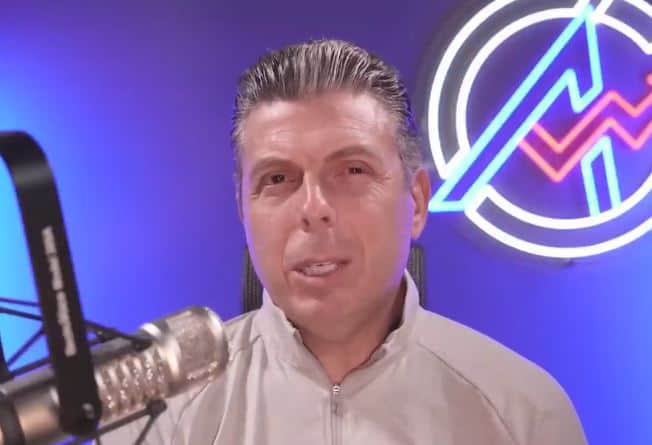
Anthony Crudele Playbook & Strategy: How He Actually Trades
Core Philosophy: Trade the Right Side of the Tape
Anthony keeps things simple: identify the dominant side, wait, and hit only when the odds lean your way. This section lays out how he frames bias so you’re not chopping yourself up in two-sided noise.
- Start each session by declaring: “I will only trade long (or short) until proven otherwise.”
- Define “otherwise” as a clear structure break on your primary timeframe (e.g., 15- or 30-minute close beyond prior swing and VWAP flip).
- If bias = long, only take longs above VWAP; if bias = short, only take shorts below VWAP.
- Avoid counter-trend scalps unless the session is range-bound and volatility is under your threshold (see risk section).
- Re-evaluate bias only on the hour or after a stop-out—never mid-trade because of emotions.
Chart Package & Tools: Simple, Repeatable, Fast
Anthony favors a minimal chart so decisions are fast and consistent. Here’s the exact tool stack and how to configure it.
- Primary timeframe: 5-minute for execution, 15/30-minute for structure, daily for context.
- Overlays: 20-period Bollinger Bands at 3 standard deviations, session VWAP (with optional anchored VWAP to the cash open).
- Momentum: RSI(14) on the execution chart, used only for context (divergence, exhaustion).
- Order flow: basic tape/DOM for pace and pull/stack cues; no complex footprint dependency.
- Keep only one or two markets on screen (e.g., ES and NQ) to reduce context switching.
Market Regime First: Expanders vs. Ranges
He trades the market in front of him, not the one he wants. This section helps you label regimes so your entries, targets, and stops match the day type.

- Expanding (trend) regime: price walks the outer 3σ band and holds VWAP in the direction of trend; take continuation pullbacks to VWAP/mid-band.
- Range regime: price mean-reverts between VWAP and bands; fades extremes back toward VWAP with smaller size.
- Rule of three tests: (1) VWAP slope, (2) band angle, (3) higher-timeframe swing context. Need two of three to label the regime.
- If the regime is unclear for 30 minutes after cash open, do not trade until a test and rejection/acceptance of VWAP occurs.
A+ Setup Template: VWAP Pullback With Band Context
Here’s the bread-and-butter structure that Anthony leans on in trend days. Follow the checklist and you’ll filter out most low-quality noise.
- Bias established (long example): above rising VWAP with higher-timeframe higher lows intact.
- Wait for a pullback toward VWAP or the mid-band; RSI should cool toward 50 without making a lower low on price.
- Trigger: reversal candle + tape speed uptick (e.g., bid absorption flips to lift aggression) within 2–5 ticks of your zone.
- Entry only if risk ≤ 0.5R to the invalidation (below the last swing low or band pierce).
- First target = prior impulse high; runner targets = outer band trail or ATR(14) x 0.75.
Trade Management: Pre-Planned, Mechanical, Boring
Anthony’s edge shows up because his exits don’t drift with feelings. Use this section to script your management before you click.
- Always stop the moment you enter; no exceptions.
- Scale plan: 1/2 off at 1R, move stop to breakeven; trail remainder behind last confirmed swing or VWAP.
- If price closes against bias on your execution timeframe, flatten—don’t “give it room” beyond the plan.
- Time stop: if not at 1R within 15–25 minutes (index futures) or your market’s average impulse window, scratch.
- One trade per setup idea; do not re-enter unless a fresh structure forms (new higher low/lower high).
Risk Sizing & Volatility: Let VIX/ATR Dictate Size
He adjusts the size to the tape’s speed so a normal loss stays emotionally small. Calibrate risk with the same math each day.
- Define max daily drawdown (e.g., 2R or 1% equity); stop trading once hit.
- Per-trade risk = 0.25–0.5% of account in normal vol; cut to 0.15–0.25% when ATR expands 20% above 20-day average.
- Only increase contracts when your 10-trade rolling expectancy is positive and daily PnL is >+2R.
- If stop distance doubles because of volatility, halve size; if stop distance shrinks by half, do not automatically double size—cap increases at +33%.
- Never widen stops post-fill; widen only pre-trade by using a higher timeframe and reduced size.
The “No-Trade Is a Trade” Filter
Patience is an actual tactic in Anthony’s playbook. This section shows how to turn waiting into a rule, not a vibe.
- No trades in the first 3 minutes after cash open; let VWAP establish.
- Stand down during major data releases; resume only after a 5-minute bar closes and VWAP is retested or reclaimed.
- If three consecutive bars print overlapping bodies (chop signal) and range < 0.3x ATR(5), do not trade that micro-window.
- After a stop-out, a mandatory 10-minute timeout to reassess bias and regime.
Order-Flow Cues: Simple Tape Reads That Matter
He uses just enough order flow to confirm entries, not to predict the future. Keep these tests tight and testable.
- Look for absorption at your level (stalled prints on the bid for longs / ask for shorts) followed by a quick flip in aggression.
- Avoid entries when the book is thin and prints are sporadic—slippage risk > average.
- If price tags your level but the tape doesn’t accelerate within 2–3 seconds, pass; your best trades “go” quickly.
- Add confidence when reclaiming VWAP comes with strong lift volume and a full-body close back above it.
Playbook for Range Days: Band to VWAP Mean Reverts
When the market is balancing, the plan flips from continuation to fade. Here’s how to handle it without getting steamrolled by a sudden trend transition.
- Short the upper band only if VWAP is flat/down and the 15-minute swing is lower high; target VWAP, stop beyond band pierce.
- Long the lower band only if VWAP is flat/up and the 15-minute swing is higher low; target VWAP, stop beyond the band pierce.
- Take profits quicker: 2/3 off at VWAP, 1/3 trail to mid-band flip; no hero holds.
- If price closes outside the 3σ band and holds for two bars, assume regime is shifting—stop fading and reassess.
Session Routine: Prep, Execute, Review
Anthony treats routine like a weapon. Use this workflow to keep decisions clean and repeatable.
- Pre-market (20–30 min): mark prior day high/low, overnight high/low, key swings; label trend vs. range hypothesis; write your one-sentence bias.
- Opening hour: trade only A+ patterns at pre-planned levels; skip if VWAP is whipsawing.
- Mid-day: reduce frequency; trade only clean retests with strong tape or skip entirely.
- Last hour: re-engage only if the day trend is intact and VWAP aligns; otherwise, protect PnL.
- Post-market: log every trade with a screenshot, regime label, and whether it matched the playbook; note one improvement for tomorrow.
Drawdown & Confidence Rebuild Protocol
He protects the mental edge by shrinking risk and narrowing focus after rough patches. Copy these exact thresholds.
- If you hit max daily drawdown, stop; next day, trade half size and only your top setup.
- Two red days in a row: reduce risk by 50% and cap trades to three; require confluence of VWAP + structure + tape.
- Three green days after a cut: restore normal risk incrementally (25% steps), never jumping straight to full size.
- During rebuild weeks, avoid adding markets; focus on your main instrument and A+ conditions only.
Personal KPIs: What to Track to Stay Honest
Anthony’s simplicity extends to performance metrics. These five numbers keep you aligned with what actually pays.
- Win rate by regime (trend vs. range) and by setup (VWAP pullback vs. band fade); aim to cut the lowest-expectancy bucket.
- Average R per trade and per day; protect daily R more than dollar PnL.
- Time-to-1R and adverse excursion; abandon triggers that linger without momentum.
- Slippage vs. plan; skip thin periods if slippage > 30% of planned risk.
- Rule adherence score (0–100) per session; no scaling up unless score ≥ 80 for five sessions.
Pick a Side and Trade It: Mechanics Over Prediction Every Session
Anthony Crudele builds every day around a declared bias, not a forecast. He picks long or short based on structure and VWAP, then refuses to take the opposite side until a clear break invalidates that stance. By committing to one direction, he simplifies decisions and filters out the urge to “catch both ends” of a choppy tape. The point is to execute a repeatable process, not to be right about every twist.
Once Anthony Crudele sets bias, mechanics take over: entries only with the trend, stops placed at structure, and exits pre-planned before the click. He re-evaluates the side only on a higher-timeframe close or after a defined stop-out—not mid-candle when emotions are loudest. If the tape isn’t confirming—no VWAP hold, no momentum follow-through—he stands down instead of forcing a prediction. The edge comes from consistency: same criteria, same timing, same risk framework, session after session.
Size Risk to Volatility: ATR, VWAP, and Stop Distance Drive Size
Anthony Crudele sizes positions only after volatility and structure define the real risk. He starts with a fixed R (a percent of equity) and adjusts contracts so the dollar risk equals R times the stop distance derived from ATR and the nearest structural invalidation. If ATR expands, he cuts contracts; if ATR contracts, he resists over-sizing and caps any increase. VWAP helps him judge whether volatility is directional (trend day) or mean-reverting (range day), which changes how wide the stop needs to sit.
Anthony Crudele won’t widen a stop after entry; he shrinks the size before entry to fit the plan. Time matters too—if a trade hasn’t reached 1R within a typical impulse window, he scratches rather than letting volatility grind him down. By letting ATR, VWAP posture, and stop distance dictate size, his losses stay small and his winners scale naturally with the tape.
Trend Day Playbook: VWAP Pullback Entries, Bands for Targeting
On trend days, Anthony Crudele waits for the price to ride above a rising VWAP, then stalks pullbacks into VWAP or the mid-band for entries. He wants the dip to cool momentum without breaking structure—think RSI easing toward 50 while higher lows hold. The trigger is simple: a reversal candle and a quick flip in tape aggression right at the level. Stops live just beyond the invalidation (prior swing or a clean band pierce), never widened after entry. First target is the prior impulse high; runners trail toward the outer band so the trend can do the heavy lifting.
Anthony Crudele treats confirmation as non-negotiable: if the reclaim of VWAP lacks follow-through within a few bars, he passes. He scales out systematically—partial at 1R, then lets the market pay him for patience as price walks the band. Time matters too; if the move can’t reach 1R within a typical impulse window, he scratches and waits for the next clean pullback. The whole point is to turn a trend day into a series of mechanical, asymmetric bets rather than one oversized hero trade.
Range Day Plan: Fade Band Extremes Back to VWAP
When the session balances, Anthony Crudele flips from trend continuation to disciplined mean reversion. He looks for prices to stretch into the outer Bollinger Band while VWAP is flat, and the 15-minute structure shows lower highs for shorts or higher lows for longs. The goal isn’t to nail tops and bottoms; it’s to fade exhaustion back toward VWAP with tight risk and modest expectations. Stops sit just beyond the band pierce or the most recent micro swing, and he refuses to widen them once filled.
Anthony Crudele takes profits faster on range days because edges decay quickly. First scale comes at the VWAP touch, and any runner is trailed aggressively near mid-band or the prior mini-swing. If price closes outside the 3σ band and holds for two bars, he abandons the fade and reassesses—range may be morphing into trend. No trade is taken if VWAP slope meaningfully turns against the fade, and if the tape doesn’t accelerate within a few seconds off the level, he passes and waits for the next clean stretch.
Process Discipline: Daily Drawdown Caps, Time Stops, One Setup
Anthony Crudele treats discipline like a system, not a mood. He hard-caps his daily drawdown and stops trading the moment it’s hit—no “one more try.” Every trade starts with a time stop; if it hasn’t reached a defined milestone within the expected impulse window, he scratches. After any stop-out, Anthony Crudele pauses to recheck bias rather than jumping straight back in.
He also narrows his focus when needed: if he’s off rhythm, he trades only his A+ setup at reduced size. Journaling is mandatory—entry reason, regime label, adherence score—so the next session opens with clarity, not vibes. Scaling up happens only after several sessions with high rule adherence and positive expectancy. The result is fewer impulsive clicks, smaller drawdowns, and more consistent execution across different market conditions.
Anthony Crudele’s core lesson is to keep the game simple, consistent, and skewed in your favor. He builds each session around a declared bias, then lets mechanics—not predictions—do the work. Regime comes first: trend versus range. He reads it with a daily lens and a minimalist toolset—20-period, 3-standard-deviation Bollinger Bands to frame expansion or balance, anchored VWAP to confirm acceptance or rejection, and RSI for context only. On trend days, he stalks VWAP pullbacks and lets runners walk the outer band; on range days, he fades band stretches back to VWAP with quicker profit-taking. The bigger picture always supersedes the short-term tape, and “no trade” is a perfectly valid trade when structure isn’t aligned.
Risk is treated like a thermostat, not a guess. Position size follows volatility and stop distance, never the other way around. Stops are placed at structural invalidation and never widened; time stops scratch slow, low-quality moves before they become problems. He caps daily drawdown and shuts it down when hit—no revenge clicks. After a stop-out, he forces a pause, rechecks bias, and trades only his A+ setup until rhythm returns. The result is a process that survives regime shifts: patient when markets are choppy, aggressive when they’re trending, and always grounded in repeatable rules that turn discipline into a durable edge.

Related posts:
- Trader Strategy Roundtable: Lessons From 100+ Years On The Tape
- Trader Strategy Deep-Dive: Sang Lucci on Timing, Tape, and Tough Lessons
- Prop Firm Reality Check: Trader Strategy from the Tech Side of the Industry
- MACD and Bollinger Bands Strategy – BB MACD Tutorial
- How to set Bollinger Bands on MT4?
- Keltner Channel vs. Bollinger Bands Indicator
- Trader Mindset Meets Market Edge: Rob Lipsett’s Strategy Every Trader Can Steal
- Trader Strategy Playbook: Ross Maxwell on Edge, Risk, and Scaling as a Trader
- Trader Strategy Playbook: How a World Cup Futures Trader Finds Edge Over Wall Street
- Crypto Trader Strategy: How “Trader Mayne” Navigates Bull Markets Without Losing His Edge
- Trader Strategy Secrets with Larry Williams: How a World-Record Trader Thinks About Risk, Drawdowns, and Edge
- From Gaming to Edge: A Trader Strategy You Can Actually Use