Table of Contents
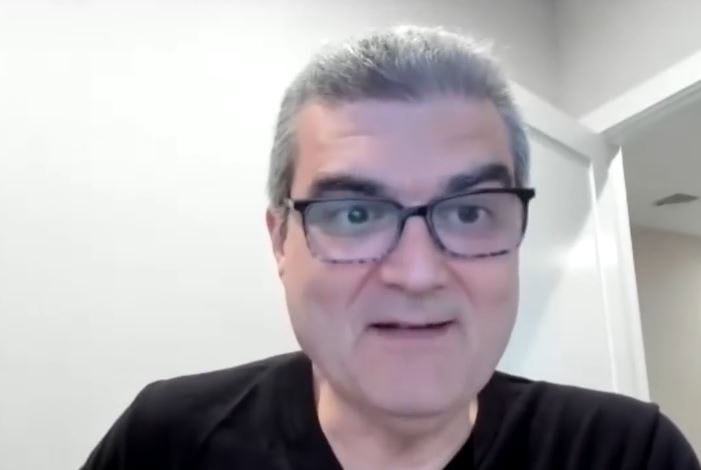
This interview features Boris Schlossberg—veteran FX voice turned stock-index futures day trader—breaking down how he evolved from currencies to high-volatility instruments like Nasdaq and Dow micros. He explains why “the instrument must fit your personality,” why short-term trading accelerates learning through hundreds of reps, and how a simple volatility gauge (like a 10-period ATR) keeps your stops and targets honest. Most importantly, Boris emphasizes trading with the prevailing bias (continuity over reversal), using indicators to filter for the strong side and ignoring the weak side to push win rates meaningfully higher.



In this piece, you’ll learn Boris Schlossberg’s practical, beginner-friendly blueprint: how to pick the right market for your temperament, scale expectations to current ATR, combine real-money learning with demo “sandboxing” to test ideas, and avoid the classic sinkholes of overtrading and revenge trades. You’ll come away with a clear view of his trend-first playbook—filter for bias on higher timeframes, execute on the lower timeframe, and let execution tools reduce mechanical errors—so you can adapt the same principles to your own trader strategy with less stress and more consistency.


















Boris Schlossberg Playbook & Strategy: How He Actually Trades
Market & Instrument Fit
Boris keeps it simple: trade instruments that move cleanly and fit your temperament. He favors high-volatility, high-liquidity markets where you can get dozens of quality reps and quick feedback. If an instrument constantly triggers your fear or FOMO, it’s the wrong tool.
- Pick one index future or CFD (e.g., Nasdaq/Dow micro) and stick to it for 30 trading days.
- Require average daily range sufficient for your target: at least 8–10× your typical stop (measured by ATR).
- Avoid choppy symbols during your session—if the last 3 sessions printed overlapping ranges, switch to a second instrument on your bench.
- Use a single account and fixed lot/micro contract size until your win rate > 52% over 100 trades.
Bias First, Then Tactics
He leans with the strong side. The point isn’t to nail tops and bottoms—it’s to align with the dominant intraday bias so your entries have tailwind. You’ll filter out a lot of junk by refusing to fade strength.
- Establish bias from a higher timeframe (H1/H4 or 15m/60m pair): higher highs/higher lows = long bias; lower highs/lower lows = short bias.
- Trade only in the direction of bias until market structure clearly flips (break of swing structure + hold).
- If bias is unclear (mixed structure, overlapping sessions), reduce the size by 50% or sit out.
- Permit one counter-trend trade per session only if it tags a major level (previous day high/low or session VWAP band) and instantly confirms.
Volatility-Scaled Risk
His risk is sized by current volatility, so stops aren’t too tight or silly-wide. ATR is a quick, objective way to anchor risk and targets to the market’s pace today—not last week.

- Use a 10-period ATR on your execution timeframe to set stop distance = 1.0–1.5× ATR.
- Initial target = 1.0× ATR; stretch target = 1.5–2.0× ATR when trend day conditions persist.
- Risk per trade = 0.25–0.50% of account; never exceed 1R total risk on simultaneous open positions.
- If ATR contracts by 30% versus your baseline, cut position size proportionally or skip the session.
Entries: Simple Triggers, Consistent Reps
Boris prefers straightforward triggers you can repeat without overthinking. Let structure set the stage, then use a fast confirmation so you’re not chasing candles.
- With long bias: buy the first clean pullback to rising VWAP/EMA cloud (e.g., 20/50 EMA) that prints a bullish engulfing or break of pullback high.
- With short bias: sell the first clean pullback to the falling VWAP/EMA cloud that prints a bearish engulfing or break of pullback low.
- Require confluence with a session level: prior day high/low, IB (initial balance) range, or round number (00/50).
- No entry if spread > 20% of stop or if slippage on the last 3 fills averaged > 0.3R.
Trade Management: Mechanical and Fast
He removes drama from management. Define the exits when you enter so you’re never negotiating with a moving market.
- Place a stop the moment the order fills; never widen it.
- Move to breakeven at +0.7× ATR or when price closes beyond the last swing in your direction.
- Scale out 50% at 1.0× ATR; trail the remainder using a swing-based stop or a 10-bar chandelier (ATR multiple 1.5).
- If price stalls for 10 bars with net progress < 0.3× ATR, scratch at market and recycle the idea later.
Session Timing & Playbook Days
He hunts when flows are thick and directional. Your edge lives in timing: show up for the sessions that actually pay.
- Primary windows: first 90 minutes of the equity cash open and the hour around a major data release.
- Skip mid-day drifts unless the day is a clear trend day (price hugging VWAP band with shallow pullbacks).
- On range days, switch to “fade extremes” only after two confirmed failures at the same boundary.
- Hard flat 5 minutes before top-tier news unless your plan explicitly trades it with half size.
News & Narrative Filter
Macro headlines set tone, but execution stays technical. Use the calendar to avoid landmines and to explain sudden regime shifts.
- Mark all high-impact events on your chart before the session; set alerts 15 minutes prior.
- If a surprise event spikes ATR by >50%, pause for two candles before resuming the plan.
- After news, re-assess bias from structure; don’t assume the pre-news trend survived.
- Never chase the first impulse bar; wait for the first orderly pullback that holds VWAP.
Tools & Chart Setup
Boris favors a minimal, repeatable layout. Fewer inputs, more signal. Keep your toolkit boring so your execution can be excellent.
- Charts: higher-timeframe bias pane (H1/H4 or 60m/15m), execution pane (1–5m).
- Indicators: 20/50 EMA, VWAP with standard bands, 10-period ATR, swing-high/low markers.
- Levels: prior day high/low, overnight high/low, IB, weekly open, and nearest round numbers.
- Algos/DOM optional; if you use DOM, pre-set bracket orders with fixed stop/target templates.
Risk Controls & Daily Guardrails
He treats risk as a budget you defend like life support. A solid day is often the result of avoiding one dumb decision.
- Daily loss limit = 2R; hit it and you are done for the day—no exceptions.
- Max 3 consecutive losses; after the third, step away for 30 minutes or end the session.
- Limit of 6 planned trades per session; if you exceed it, stop trading and journal why.
- Weekend review: if weekly drawdown > 6R, cut size by 50% next week until back to equity highs.
Process, Journaling, and Review
Consistency comes from feedback loops. Track what you actually did, not what you intended to do.
- Journal immediately after each trade: bias, setup tag, ATR, R planned, R realized, management notes, emotion tag.
- Tag outcomes by day type (trend, range, news-whip) and by setup variant (pullback, breakout, fade extreme).
- Run a weekly scorecard: win rate, average R, expectancy, slippage, and rule-break count. Only scale size after two green weeks with rule-breaks ≤ 1.
- Create a “do more / do less” list every Friday and pin it on your chart for next week.
Mindset & Execution Discipline
He plays offense with entries and defense with risk. Your edge is your ability to repeat high-quality decisions under stress.
- Pre-market: 5-minute plan—bias check, levels, scenarios, and your first two A-setups.
- In-trade: don’t look at P&L; manage by levels and rules. Hide the dollar column if necessary.
- Post-trade: stand up for one minute before the next order to reset and avoid tilt.
- If you break a rule, the next trade is automatically half-size and must be an A-setup only.
Scaling Up the Right Way
Size increases should feel boring. If your heart rate spikes, the size is too big. Earn the right to press when the data supports it.
- Increase size by 25% after 200 trades with expectancy > 0.15R and max drawdown < 8R.
- Add a second instrument only when your primary remains profitable for two consecutive months.
- On “A+ conditions” (trend day + clean bias + strong breadth), allow one pyramid add at +1R with stop pulled to breakeven on the whole.
- If a size bump degrades your execution (late entries, early exits), revert immediately and re-test for another 100 trades.
Size Stops to Today’s ATR, Not Yesterday’s Comfort Zone
Boris Schlossberg keeps risk anchored to the market’s current pace, not a fixed number you “like.” If volatility expands, his stop widens; if volatility contracts, his stop tightens—simple, objective, and consistent. He’ll pull a 10-period ATR on the execution timeframe and peg the initial stop near 1.0–1.5× ATR so normal noise doesn’t shake him out. That way, the stop reflects what price is actually doing today, not what felt safe last week.
This also clarifies targets and sizing in one shot: if the stop is 1× ATR, the first target can mirror that, and size adjusts so the dollar risk stays constant. Boris Schlossberg treats this as a daily calibration—no ego, no guesswork, just numbers. Traders who adopt it avoid the twin traps of micro-stops in fast markets and absurdly wide stops in slow ones.
Trade With the Strong Side; Let Structure, Not Opinion, Lead
Boris Schlossberg starts by defining bias on a higher timeframe and refuses to fight it. If structure is printing higher highs and higher lows, he’s long-biased; lower highs and lower lows, he’s short-biased—no debates, no “this time is different.” He treats opinions as noise until price proves a regime change with a break and hold beyond the last key swing.
Once bias is set, Boris Schlossberg hunts simple pullbacks in the direction of strength instead of top-ticking or knife-catching. He waits for a clean retrace to a moving average or VWAP area, then a decisive shift back with a strong candle close before committing. If bias turns muddy or conflicting across timeframes, he cuts size or stands down to protect expectancy. By letting structure lead and entries align with the strong side, he stacks small edges—better win rate, less stress, and fewer catastrophic fades against momentum.
Diversify by Strategy and Duration, Not Ten Correlated Symbols
Boris Schlossberg warns that owning five indices or three tech stocks isn’t diversification; it’s the same bet in different wrappers. He prefers mixing playbook types and time horizons—trend-follow plus mean-revert, breakout plus pullback, intraday plus swing—so one regime doesn’t nuke the whole book at once. He’ll pair a momentum intraday setup with a slower swing idea to smooth equity-curve wiggles and reduce dependence on any single market mood. The goal is uncorrelated edges, not a crowded roster.
Boris Schlossberg also staggers holding periods, so winners and losers don’t cluster on the same day. He sizes smaller on longer-duration swings and keeps intraday risk tight, letting time diversification work without blowing up the daily loss limit. If two strategies start moving in lockstep, he pauses one until correlation cools. By diversifying across strategy archetypes and durations, he builds a more stable P&L than any basket of highly correlated symbols ever could.
Risk Budget First: Daily Max Drawdown, Loss Streak, Hard Stop
Boris Schlossberg runs every session with a pre-set loss budget so emotions never sit in the driver’s seat. He defines a daily max drawdown in R and a maximum loss streak; if either hits, he’s flat—no “one more try.” That rule keeps compounding intact by capping the worst day before it becomes a worst week. He also plans a session hard stop time, because fatigue trades are just as costly as reckless ones.
Boris Schlossberg treats these limits as performance rails, not suggestions. When he’s near the loss cap, size is cut, and only the cleanest A-setups qualify; tilt trades are disqualified by rule. If he breaks a rule, the very next trade is smaller and must follow the plan step by step. The net effect is a smoother equity curve, fewer hail-mary decisions, and the confidence that survival—capital and psychological—always comes before trying to be a hero.
Process Over Prediction: Timed Sessions, Preplanned Levels, Mechanical Exits
Boris Schlossberg treats the session like a checklist, not a crystal ball. He shows up at the same windows each day, marks the prior day’s high/low, overnight extremes, and opening range, then waits for the price to interact on his terms. The plan decides whether he engages; the market doesn’t lure him into random swings between levels. Because the session is timed, he conserves focus for the hours that actually pay, avoiding the slow churn that breeds FOMO trades.
Exits are scripted before entry, so there’s nothing to negotiate mid-trade. Boris Schlossberg defines the initial stop, the partial at 1R, and the trail trigger while the mind is calm, turning execution into button clicks instead of judgment calls. If price stalls for too long or breaks structure, he’s out—no hoping, no “just one more candle.” That mechanical loop—timed sessions, preplanned levels, prewritten exits—lets process beat prediction, and consistency beat impulse.
Boris Schlossberg’s core message is ruthless practicality: pick instruments whose volatility and liquidity let you get clean reps, size everything to today’s pace, and lean only with the prevailing bias. He calls out indices and crypto for their “massive volatility,” which creates many small, high-quality opportunities on the 1-minute—far more than slow FX pairs—so your learning curve steepens without forcing prediction games. That instrument choice dictates realistic targets and trade frequency, and it’s why he prefers micros for beginners: tiny contracts, hundreds of trades, and real feedback without catastrophic risk.
From there, Boris Schlossberg builds edge with structure and repetition: define bias on a higher timeframe and trade only in that direction on the execution chart, ignoring the flood of counter-signals. He treats patterns as fractal and evolves simple breakout/pullback ideas by layering signals and demanding they work across timeframes before earning capital. Finally, he pairs real-money experience (to expose emotional pitfalls) with a parallel demo track to safely test creative tweaks, accelerating improvement while protecting the account. Tight, repeatable rules—instrument fit, bias discipline, fractal validation, and dual-track practice—form the backbone of how he actually trades, session after session.

Related posts:
- Boris Schlossberg Trader Strategy: Survive Prop, Size Right, Trade What’s There
- Boris Schlossberg Trader Strategy: Live Scalping, Prop Discipline, and Risk Done Right
- Trader Strategy Masterclass: Boris Schlossberg, Brad Jelinek & Andrew Aziz
- Boris Schlossberg Trader Strategy: Two Setups, One Instrument, Real-World Edge
- Prop Firm Reality Check: Trader Strategy from the Tech Side of the Industry
- Anthony Crudele Trader Strategy: Bollinger Bands, Satience, and a One-side-of-the-tape Edge
- Trader Strategy Playbook: How TraderNick Turns Volatility into Edge
- Pavel Kycek Trader Strategy: How Algorithmic Discipline Tames Crypto Volatility
- A Trader’s Trading Strategy Playbook: Why Tom Sosnoff Says “Trade Small, Trade Often”
- Buy-Side Vs. Sell Side
- Erik Smolinski Trader Strategy: Fit the Trade to the Market
- Roger Khoury Trader Strategy: How to Forecast Risk Before You Trade