Table of Contents
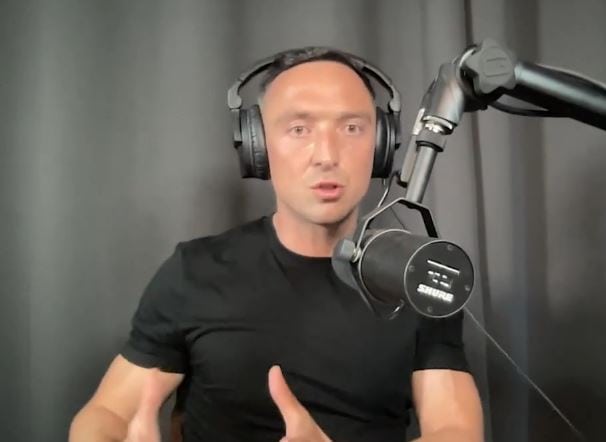
James King—an elite performance coach who has worked with fund managers, proprietary trading firms, and world-class athletes—joins us to unpack how traders actually get better. In this interview, King lays out why understanding your own wiring matters as much as market knowledge, and how “accelerating excellence” is a trainable skill. If you’ve ever felt stuck copying someone else’s playbook, this is the reset you need.



You’ll learn the trader strategy behind King’s approach: align your strengths, interests, and values to a trading style you can sustain; build real skill through deliberate practice (not theory hoarding); and use simple “on/control/off” routines to enter flow, recover fast, and avoid tilt. We’ll also hit the practicals—how to define entries/exits/sizing so you stop winging it, the right way to simulate and review, and how to patch mindset “bugs” after drawdowns—so you can execute with confidence and consistency.



















James King Playbook & Strategy: How He Actually Trades
Fit First: Align style to strengths.
Before James King talks about entries, he talks fit. If your style clashes with your temperament, you’ll leak discipline and money. This section turns your personality into hard trading constraints you can actually follow.
- Pick one primary market and timeframe you enjoy watching (e.g., ES 5-minute or EURUSD 15-minute) and commit to 30 sessions.
- Define your “arousal zone”: if fast moves spike your heart rate, trade higher timeframes; if you get bored, move down a timeframe—but never below the point where you start rushing decisions.
- Choose one of three cores: mean-revert, trend-follow, or breakout; write it at the top of every plan and reject any setup that doesn’t match it.
- Cap watchlist to ≤5 names/markets to protect attention; add a new product only after three green weeks.
- Write a 2-sentence Edge Statement (“I exploit post-news pullbacks into VWAP with tight risk on ES during NY open.”) and use it as a filter for every trade.
One Play You Can Hammer
King favors depth over breadth. This is about carving a single, repeatable play you can scale, not a scrapbook of indicators. Keep it brutally specific so it survives stress.
- Name the play (e.g., “Opening Drive Reclaim”).
- Preconditions (all must be true): overnight range > 0.8× ATR; first pullback to VWAP before 10:15 ET; tick breadth aligned.
- Trigger: break of pullback high/low with 1 candle close beyond a level you pre-marked.
- Initial stop: 1× the pullback candle range or last swing—whichever is smaller.
- First target: 1R; second target at structure (prior day high/low); trail remainder with last closed swing.
- If the play doesn’t trigger in its time window, it does not exist today—stand down.
Risk Like a Pro: Sizing, Heat, and Loss Limits
Performance collapses when risk is fuzzy. King makes sizing mechanical so emotions can’t hijack you mid-trade. Here’s the math you paste into your journal.

- Fixed fractional risk per trade: 0.5R–1R of account equity; new traders stay at 0.25–0.5R for 60 sessions.
- Daily loss stop: −2R; weekly loss stop: −5R. Hit either—stop trading and shift to review mode.
- Portfolio heat cap: sum of open risk ≤ 2R; never add if the heat would exceed the cap.
- Scale only after 20 consecutive sessions with positive expectancy and drawdown ≤ 5R.
- If spread/volatility widens so your planned stop > 1.2× average, halve size; don’t “wish” it tighter.
Prep Block: On-Ramp Your Brain
Execution quality depends on the state. King uses a short “on-ramp” so you arrive focused and calm rather than chasing the first candle you see.
- 15-minute premarket: mark overnight high/low, yesterday’s high/low, VWAP, and one or two “if-then” scenarios.
- Two breaths per step: inhale 4s, exhale 6s for 10 cycles to down-shift arousal.
- Write the day’s bias in one line (e.g., “Buy pullbacks above prior high while breadth positive”).
- Pre-commit your max trades (e.g., 3 attempts) and time window (e.g., 09:30–11:00 ET only).
- Turn off all chats/alerts unrelated to your play; your edge is attention, not noise.
Execute Clean: Rules in the Fire
Your plan should remove mid-trade debate. King’s execution rules are blunt, so they’re easy to keep when candles are flying.
- Enter only on your trigger; no “anticipation entries” allowed.
- If price tags your stop, you’re out—no widening; re-enter only if all preconditions reset.
- Move stop to breakeven after +1R or after a confirmed structure break in your favor—whichever comes first.
- If price stalls for 3 candles at your level without progress, cut in half and reassess.
- No averaging down. Adds only at structural pullbacks that maintain original invalidation.
Journal That Teaches You Back
King treats the journal as a skill accelerator, not a diary. Capture evidence that actually changes behavior next time.
- For every trade, log: screenshot with entry/stop/targets, R multiple planned vs. realized, and which rule you followed or broke.
- Tag each trade by play name; review only the same tag weekly to spot pattern drift.
- Write a 3-line post-trade: “What I saw,” “What I did,” “What I’ll do next time”—no stories, just rules.
- Track two metrics: Rule Adherence % and Average R/Trade; only scale size when both improve together.
- End of week: archive three best and three worst charts; rewrite one rule for clarity.
Drawdown Protocol: Stop the Bleed Fast
Everyone draws down; pros shrink it quickly. King’s protocol turns pain into a bounded drill rather than a spiral.
- At −3R day or −5R week, shift to sim for the next session and run 10 reps of your main play.
- Cut size in half for 5 live trades after sim; restore size only if Rule Adherence ≥ 85%.
- Replace “win back” goals with a process goal (e.g., “3 A-setups executed to spec”) for the next two sessions.
- Add an extra review: identify the earliest rule you broke in each losing sequence and move that rule higher in your checklist.
Energy, Sleep, and State Management
King blends performance coaching with trading. Your edge degrades when sleep and fuel are off; lock in simple baselines.
- Minimum 7 hours time-in-bed; no new setups if sleep < 6 hours the night before.
- 90-minute focus blocks; step away 5 minutes every 45–60 minutes during open.
- No caffeine first 60 minutes after waking; hydrate before the bell.
- If you rate your mental state <7/10 pre-open, switch to observer mode—plans only, no orders.
Review Loop: Weekly and Monthly Upgrades
Improvement is scheduled, not accidental. King’s loop keeps adaptation steady without thrashing your system.
- Weekly (30–45 min): update equity curve in R, review tagged plays, and decide one tweak to test next week.
- Monthly (60–90 min): recalc expectancy per play; kill any tag with a win rate < 35% and negative expectancy.
- Promote one “B-setup” to “A” only after 50 recorded reps with positive expectancy.
- Archive a one-page Playbook vX.Y each month; you should see rules getting shorter, not longer.
Higher Timeframe Context in Two Steps
Context reduces fakeouts. King keeps it fast so you don’t drown in analysis paralysis.
- Mark the weekly and daily swing structure (HH/HL or LH/LL) and one composite level (monthly open or quarterly VWAP).
- Trade with the daily structure; counter-trend only at pre-marked HTF levels and cut target to 0.5–1.0R.
- If HTF and intraday disagree, trade half size or pass the first hour.
News and Volatility Guardrails
Vol spikes break fragile rules. Install guardrails so your play survives regime shifts.
- On scheduled high-impact events (CPI, NFP, FOMC): no entries 5 minutes before until 2 candles after your market re-stabilizes.
- If 5-minute ATR > 1.5× 20-day average, widen stops to structure and halve size.
- If spreads double or the platform lags, switch to observe-only; performance first, participation second.
Scaling and Compounding Without Drama
Growth should feel boring. King scales only when data says so, and risk stays constant.
- Increase size by 25% after two consecutive green weeks and stable drawdown; never double at once.
- Withdrawals: take 10–20% of new equity highs monthly to reduce “all eggs in one basket” pressure.
- Add a second play only after your first generates > 100R cumulative with stable adherence.
The 90-Day Skill Sprint
Give yourself a season to become dangerous. King’s sprint builds volume of correct reps, not just screen time.
- Pick one play, one market, one session window (e.g., NY open).
- Commit to 60 trading days plus 30 review/practice days; target 100 recorded reps.
- Success metric: Rule Adherence ≥ 85% and Expectancy > 0 by day 90; if not, refine rules, not indicators.
Daily Checklist (Pre, During, Post)
Consistency is a checklist sport. Run this every session until it’s automatic.
- Pre: mark levels, write bias, confirm max trades and loss stops, 10 calming breaths.
- During: take only A-setups; announce (out loud or written) “trigger, stop, target” before clicking.
- Post: journal with screenshot, tag by play, calculate R, note rule kept/broken, and write one improvement for tomorrow.
Mindset Micro-Habits That Compound
Tiny habits keep you steady under pressure. King’s are quick and sticky, so they actually happen.
- Before first trade: 30-second body scan—release jaw/shoulders/hands—then state your one objective for the session.
- After any impulsive action: stand up, two minutes away from the screen, rewrite the broken rule once by hand.
- End of day: write one sentence to future-you describing the best behavior to repeat tomorrow.
Environment Design: Make the Right Thing Easy
Good environment beats strong willpower. Arrange your tools so your best behavior is the default.
- Pin only the playbook chart layouts you need; hide everything else.
- Put your loss limits and rule of three attempts in the top-left corner of your platform as a sticky.
- Use a hotkey to flatten positions instantly; if you can’t exit fast, you can’t manage risk fast.
- Keep a small physical timer on your desk and set it for your trade management windows (e.g., reevaluate after 10 minutes if no progress).
Communication and Feedback (If You’re in a Team or Prop)
External accountability speeds learning. Borrow what pros do without overcomplicating.
- Share a single annotated chart per day with a partner: one thing done well, one fix for tomorrow.
- Run a 15-minute weekly post-mortem: pick one rule to tighten; test it next week and keep or discard based on data.
- If emotions run hot, hand control to your rule card—read it aloud before the next order.
Size Risk First: Fixed R, Daily Caps, No Hero Trades
James King starts with the only variable you can fully control: risk. Before he talks entries, he locks in a fixed R per trade, so the downside is the same whether the setup feels amazing or merely good. That rule keeps your emotional temperature out of position sizing, which is where most traders blow up. He pairs it with hard daily and weekly loss caps, so one bad morning can’t infect an entire month. With that safety net in place, James focuses on clean execution instead of praying a loser “comes back.”
In practice, that means choosing a small, consistent risk unit—say 0.5R to 1R—and sizing the position so the stop at a real market invalidation equals that R. If you hit your daily stop (for example, −2R), you stop trading and shift to review; no new orders, no “one more try.” A weekly threshold (like −5R) triggers a deliberate cooldown with reduced size until you’re back to high rule-adherence. James King calls this the antidote to hero trades: you can be aggressive with opportunity, but never with risk.
Allocate By Volatility: Scale Position When Range Expands Or Contracts
James King treats volatility like a speed limit for size. When the market’s range widens, he cuts position size so the same stop distance still risks the same R; when the range compresses, he allows a touch more size while keeping risk constant. This keeps trades comparable and protects the account from sudden regime shifts. James reminds traders that volatility is not good or bad—it’s a condition to price into your plan.
In practical terms, he benchmarks the current ATR or average true range of the trading timeframe against a 20-session baseline. If ATR pops to 1.5× the baseline, he halves the size or widens stops to structural levels while keeping R unchanged. If ATR dips to 0.7×, he can step size up modestly or tighten stops to structure—never both. The rule is simple: risk per trade stays fixed, sizing flexes with volatility, and execution stays calm. James King uses this to avoid death-by-chop during quiet sessions and avoid account shock when the tape turns wild.
One Repeatable Play: Preconditions, Triggers, Stops, Targets, Time Windows
James King pushes traders to master one play so deeply it becomes automatic. He defines strict preconditions—market structure, volatility, breadth, and time-of-day—so you only engage when the odds are aligned. The trigger is binary: a specific break, reclaim, or rejection confirmed by a candle close or tape behavior you’ve written down in advance. By filtering this way, James turns randomness into a narrow lane where your edge actually lives.
He then anchors the play with mechanical risk and exits. Stops sit at true invalidation—last swing, VWAP breach, or level loss—so you’re out cleanly when the idea is wrong. First target harvests 1R to reduce pressure, the remainder trails behind structure to let winners stretch. If the setup hasn’t fired within its time window, it’s dead for the day—no forcing. James King’s rule is simple: one play, executed perfectly, beats five plays executed emotionally.
Diversify By Strategy, Duration, And Market—Not Just Tickers
James King warns that owning five tech names isn’t diversification—it’s concentration with extra steps. He pushes traders to spread risk across how they make money (trend, mean reversion, breakout), how long they hold (scalp, swing, position), and where they trade (indices, FX, commodities). This cuts correlation spikes that show up at the worst possible time. James also recommends keeping one “defensive” strategy that historically performs when your primary strategy stalls.
In practice, map your book by buckets: strategy, duration, and market—then cap exposure so no single bucket holds more than 50% of open risk. Pair at least one short-duration strategy with a slower swing to smooth equity swings. If two strategies share the same failure mode (e.g., both die in chop), don’t run them together at full size. Rebalance weekly by moving risk toward the tactics with positive expectancy and away from those in drawdown. James King’s rule: diversify by edges and timeframes, not by ticker symbols wearing different logos.
Process Over Prediction: Prep, Execute, Review Loops Drive Consistency
James King teaches that consistency is a system, not a vibe. Prediction gets you excited; process gets you paid. He starts with a short prep: mark key levels, write the day’s bias in one line, and pre-commit to loss limits and max attempts. That way, when the bell rings, you’re not inventing a plan—you’re following one. James wants you to execute rules like a checklist, not narrating the market like a sportscaster.
After the trade, James King moves straight into a quick review to lock in learning. Capture a screenshot, grade rule adherence, and state one adjustment for tomorrow in plain English. If you break a rule, he says, you don’t need more indicators—you need tighter automation of the rule. Expectancy improves when the loop turns fast: prep primes execution, execution feeds review, review upgrades prep. Prediction is optional; process is mandatory.
James King’s core message is that elite trading performance is built deliberately, not discovered accidentally. He frames the job as “accelerating excellence” by engineering the conditions where your brain and body can actually win—the same way top athletes and special forces do. Translate the science into your routine, align it to your wiring, and you’ll stop trying to copy someone else’s edge and start compounding your own.
From there, King reduces “strategy” to decisions you can state on command: what to buy, when to buy, how much, when to sell for a profit, and when to sell for a loss. If you can’t answer those five prompts fast, you don’t have a strategy—yet. Train the skill under specific conditions (your play, your timeframe, your states) because improvement comes from the right reps, not more hours. Then force rapid loops from theory to small-scale execution to reflection, so your mental models harden through doing, not memorizing.
Finally, he tackles the psychological “bugs” that quietly hijack traders after drawdowns—phobia-like reactions that push you into panic and redline decisions. King’s fix is surgical: identify the glitch, run performance routines that bring you back to calm, and train emotional control so bias resistance rises and execution quality returns. The aim isn’t to feel fearless; it’s to stay integrated and deliberate when markets get loud.

Related posts:
- Trader Strategy Playbook: James Thorpe on Risk, Psychology, and Edge
- Evan Marks Trader Strategy: Aggressive Patience for Peak Performance
- Trader Strategy Playbook: James Bentley’s Keep-It-Simple Approach for the Everyday Trader
- James North Trader Strategy: How a Prop MD Keeps It Simple and Profitable
- Trader Psychology Strategy: Rande Howell’s Playbook
- Yvan Byeajee: Trader Psychology & Process-First Strategy
- Jared Tendler on Trader Psychology and Strategy that Actually Scales
- Mindset Over Money: Trader Psychology and Strategy with Krishna Sharma
- Trader Strategy Playbook: Shabs on Psychology, Risk, and Results
- Trader Psychology vs Technicals: A Real-World Strategy Traders Can Actually Use
- Inside the Broker’s Playbook: Trader Psychology and Strategy That Actually Works
- Trader Strategy Unlocked: How Abdu Trades Turns Psychology Into Profit