Table of Contents
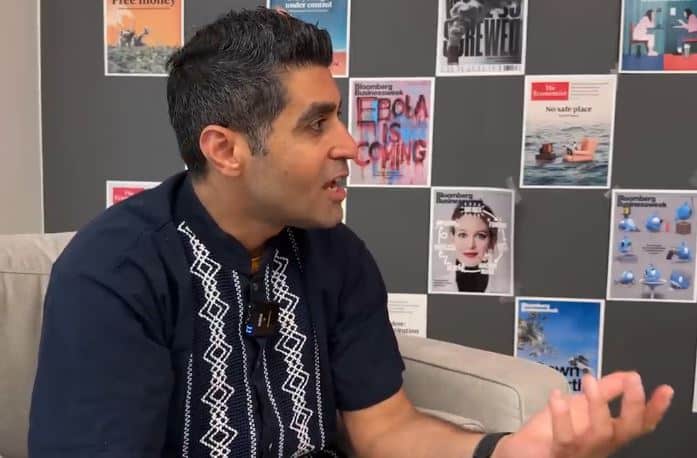
Andrew Aziz sits down for a candid, in-office chat about what still works after a decade of day trading: opening-range breakouts, ABCD patterns, and fast scalps in the first 15–30 minutes of the U.S. session. He explains how a blowup taught him to respect risk, why he now aims for ~0.5% a day on a large account, and how community and discipline kept him in the game. You’ll also hear how travel, time zones, and a simple two-hour trading window shape his routine—and why loving the “video-game” feel of pattern recognition matters.



In this piece, you’ll learn Andrew’s practical playbook: find “stocks in play” (gap, volume, fresh news), wait for the range to form, then trade the break with clear risk and quick partials. We’ll cover how he sizes big but risks small via tight stops, when he adds to winners (never losers), and why simulator time beats paying tuition to the market. You’ll also see his criteria for momentum, the role of resilience, and how to pick a strategy that fits your schedule—so you can trade with confidence, not hope.


















Andrew Aziz Playbook & Strategy: How He Actually Trades
Finding “Stocks In Play”
You can’t force an edge on a sleepy ticker. Andrew focuses on names that are already moving with volume and a reason. This section shows you how to filter the watchlist so your setups have the momentum to pay you quickly.
- Pre-market gap: ≥ +2% up or ≤ −2% down; prefer ≥ +4% for cleaner ORBs.
- Relative volume (RVOL): ≥ 2.0 by the open; pre-market volume ≥ 1,000,000 shares preferred.
- Fresh catalyst: earnings, guidance, analyst action, major news; avoid “no-news” drifts.
- Price & liquidity: > $5/share with tight spreads (≤ 2–3 cents) and > 1M 1-min opening bar volume.
- ATR: ≥ $1 daily range; avoid ultra low-float names prone to halts and slippage.
- Build a ranked list of 3–6 tickers; drop anything that loses volume into the open.
Pre-Market Plan & Key Levels
A fast open rewards traders who already know the lines that matter. Andrew pre-plans scenarios so decisions are “if-then” instead of emotional guesses. You’ll mark the same levels and define the trade before the bell.
- Draw: previous day high/low, pre-market high/low, prior close, and overnight VWAP.
- Mark whole/half dollars (00/50) and any obvious daily levels with confluence.
- Define A-plan (primary) and B-plan (backup) for long/short with entry triggers.
- Pre-set invalidation: “If price closes back inside the opening range, I’m out.”
- Limit your focus: one A-setup at the open; the rest are backups.
- Write it once: a one-line trade thesis you can repeat out loud.
Opening-Range Breakout (ORB)
This is Andrew’s bread-and-butter: quick, high-energy trades in the first minutes. The goal is to leverage range expansion with tight risk and fast partials. Here’s the play exactly.

- Choose 1-min or 5-min ORB per ticker (don’t mix on the same name).
- Long trigger: buy a break of the ORH only if the breakout bar’s volume > prior bar and > 1.5× 1-min average.
- Short trigger: sell break of ORL with the same volume condition; confirm trend with tape speed.
- Stop: initial at the opposite side of the opening range (or 0.25–0.35 ATR(14) on 1-min, whichever is smaller).
- No chase rule: if price extends > 0.5 ATR beyond the trigger without you, skip it.
- First partial at +1R, second at +2R, trail remainder with 1-minute higher-low/lower-high structure.
- Time stop: if price fails to move ≥ 0.3R within 3–4 minutes, reduce to half or exit.
ABCD Trend Continuation
When the initial impulse pauses cleanly above VWAP, Andrew looks for the classic ABCD. It’s slower than ORB but often cleaner and easier to manage.
- A = strong impulse on high volume; B = tight flag above VWAP with decreasing volume.
- C = orderly pullback into 9/20 EMA zone or VWAP with buyers absorbing at the bid.
- D = break of B-pivot high with volume expansion; enter on trigger or a small anticipatory starter into C with confirmation added at D.
- Invalidation: close below VWAP (for longs) or a wide pullback that breaks the flag structure.
- Targets: measured move (height of A-leg added to B-break) and then the nearest daily level.
- Scale: 1/3 on trigger, 1/3 through first target, 1/3 runner with EMA trail.
VWAP & Parabolic Reversal
Mean reversion is a tool, not a lifestyle. Andrew only takes it when a stock is stretched and the tape shows exhaustion. Keep the size smaller and take profits quicker.
- Setup: extension ≥ 2–3× 1-min ATR away from VWAP with a blow-off candle and volume climax.
- Trigger: new 1-min low (for short) or high (for long) after a micro double top/bottom.
- Stop: just beyond the exhaustion wick; reduce size 25–50% versus trend trades.
- First target: VWAP tap; second target: opposite side of the flag or the 20 EMA.
- If price reclaims the exhaustion level, exit—no averaging, no “it’ll come back.”
Risk, Sizing, and Daily Guardrails
Survival comes from capping the downside and paying yourself quickly. Andrew is strict on daily loss and trade risk, so one mistake can’t ruin the week.
- Per-trade risk: 0.25–0.5% of account (choose a fixed dollar R and stick to it).
- Daily max loss: 2–3R; hit it and stop trading for the day.
- First two hours only: if you’re red after the open, consider a one-and-done rule.
- Never add to a loser; add only on momentum continuation with fresh volume and new risk defined.
- Hotkeys: preset entries, stops, and partials (e.g., sell 25%, 25%, 50%) to remove hesitation.
- News/SSR check: if SSR is on, prefer reversal into VWAP fades rather than shorting breaks.
Trade Execution & Management
Great entries are wasted without a plan for exits. Andrew systematizes partials and lets the market prove it deserves more capital.
- Enter with limit-at-market (L@M) or marketable limit to avoid slippage on fast breaks.
- Partial at +1R automatically; move stop to breakeven after the second partial or a 2R push.
- Use structure stops: last 1-minute swing for ORB, last 3-minute swing for ABCD.
- If the one-line thesis breaks, flatten—don’t “manage” a broken idea.
- No overlapping correlated trades; one position per thesis.
Morning Routine & Checklist
Consistency beats brilliance at the open. Andrew runs the same pre-market routine, so his brain is already in execution mode.
- Wake-up, screens, and scanners: build the gap list and tag catalysts.
- Journal yesterday’s key mistake and one focus fix for today.
- Mark levels, write the A-plan/B-plan, pre-load orders/hotkeys.
- Define today’s R, daily max loss, and goal (process goal: e.g., “one A-setup only”).
- After the first hour, reassess: if volume dies, protect gains and step away.
Journal, Metrics, and Iteration
Edges sharpen when you measure them. Andrew tracks the numbers so he can scale what works and cut what doesn’t.
- Log every trade: setup tag (ORB/ABCD/Reversal), R taken, R returned, time of day, and reason to exit.
- Weekly review: win rate, avg win, avg loss, expectancy, and worst drawdown by setup.
- Prune: kill the bottom 10% of patterns monthly; double down on the top 10%.
- Screenshot entries/exits with levels; grade execution, not P&L.
- Sim first for any rule change for 5–10 sessions before going live.
Playbook Rules of Thumb
These are the “don’t overthink it” defaults Andrew leans on when the tape is fast. Use them as your baseline and adapt as you collect data.
- ORB window: trade 1-min ORB only on exceptional RVOL; otherwise, 5-min for cleaner noise filtering.
- Spread filter: if spread > 0.1% of price, reduce size or skip.
- Slippage buffer: place stops slightly inside structure (e.g., 1–2 ticks) on halty names.
- Two-strike rule: two scratches or losses on the same ticker—move on.
- Green-day protect: after +2R on the day, only take A+ setups with half size.
- Walk-away trigger: breach of daily max loss, broken process rule, or noticeable tilt—close platform.
Size Risk First: Fixed-R, Tight Stops, Pay Yourself Early
Andrew Aziz builds every trade around a fixed dollar risk, not a wishful target. He decides the stop first, sizes up that risk, and only then cares about the entry. That keeps losers small and predictable, even when the open gets wild. If price disrespects the level he defined, he’s out—no negotiating, no “just a little more room.”
He also pays himself early to reduce stress and lock in progress. Partial at +1R, partial again near +2R, then let the runner prove it deserves to stay. On sluggish moves, Andrew Aziz won’t hesitate to scratch or scale down; survival beats stubbornness. When a day starts choppy, he cuts risk per trade and tightens stops, protecting the weekly curve so he can show up strong tomorrow.
Trade the Open: Clean Opening-Range Breakouts With Volume Confirmation
Andrew Aziz treats the first minutes like a controlled sprint—fast, focused, and rules-driven. He waits for the opening range to form, then looks for a break with surging volume and tight spreads. If the breakout bar’s volume isn’t clearly expanding versus the prior bars, Andrew stands down; without fuel, a break is just noise. He defines the stop at the opposite side of the range and sizes the position to a fixed-R so the risk is known before clicking buy.
Once in, Andrew Aziz manages with quick partials to de-risk the trade. A +1R push triggers the first scale-out, and a +2R move often brings another, with the remainder trailed behind higher lows or VWAP. If price pops but can’t hold above the range for a full minute, he exits rather than “hoping” it sticks. And when the open is messy—wide wicks, inconsistent tape, or heavy slippage—he skips the play entirely, saving ammo for a cleaner setup later.
Let Volatility Lead Position Size, Not Your Hopes
Andrew Aziz lets the tape set his size, not his mood. If a stock’s one-minute ATR expands or spreads widen, he automatically reduces share count so the same stop still equals one fixed R. When volatility contracts and fills are clean, he allows normal size; when it explodes, he cuts it—sometimes to half—so slippage doesn’t turn a small risk into a big one. Andrew also shortens profit targets slightly in hyper-volatile moments, preferring quick partials over fishing for the moon.
He measures distance to the stop first, converts that to shares second, and only then considers adding on continuation. If the pullback is wide or the wick structure is messy, Andrew Aziz treats it as a signal to downshift rather than “power through.” He avoids overlapping correlated names during high VIX bursts to keep portfolio-level variance in check. Above all, he keeps hope out of the calculator: price action defines the risk, and the risk dictates the size—every single trade.
Diversify By Setup, Time-of-Day, And Trade Duration
Andrew Aziz doesn’t rely on a single hammer for every market nail. He rotates between ORB, ABCD continuation, and selective VWAP reversals based on how the tape is behaving that morning. If the open is choppy, he may pass on ORBs and wait for a cleaner mid-morning trend; if momentum is strong, he leans into early breakouts and shorter-duration holds. Diversifying by time-of-day also keeps him from forcing trades in dead zones—he knows when he’s most accurate and sizes his focus accordingly.
He also diversifies by trade duration, so he isn’t married to one tempo. A quick scalp might pay for the day and buy emotional room for a slower ABCD later, while a reversal into VWAP can be a one-and-done after lunch. Andrew Aziz keeps rules consistent across setups—fixed risk, pre-defined invalidation, and structured partials—so variety never becomes chaos. That blend of setup, timing, and hold time reduces dependency on any one edge and smooths the equity curve when the market mood shifts.
Process Over Prediction: Pre-Plan Levels, Execute Rules, Stop on Tilt
Andrew Aziz treats forecasting like background noise and processes like the main event. Before the bell, he marks daily levels, pre-market highs/lows, and VWAP, then writes a one-line thesis for each A-setup. If price action aligns with that script, he executes; if it doesn’t, he passes without debate. The goal isn’t to be right about direction—it’s to be right about following rules.
During the trade, Andrew Aziz lets predefined triggers, stops, and partials run the show. He won’t average down, won’t move a stop “just a little,” and won’t chase after a missed breakout. If emotions spike—anger, FOMO, revenge—he recognizes tilt and stops trading for the session. Process keeps him consistent; prediction only tempts him to improvise where the market punishes improvisation.
Andrew Aziz’s core lesson is simple: control risk first, then let momentum do the heavy lifting. He builds every trade around a fixed dollar R, sizes to the stop (not the position value), takes quick partials at predefined milestones, and never averages down—hard rules forged by a painful 2022 loss that started as a day trade and morphed into a levered hold. He sticks to a tight playbook—opening-range breakouts, ABCD continuations, and selective mean-reversion—executed in the first 15–30 minutes when volume is honest and spreads are tight. “Stocks in play” come from gaps, catalysts, and real liquidity; penny-style names and sloppy spreads are skipped. On hyper-volatile opens, he cuts size automatically so one slip doesn’t turn a small R into a day-ender. If a breakout can’t hold beyond the range or the tape contradicts his one-line thesis, he’s out without debate.
Around that engine sits a lifestyle of discipline and durability. Andrew Aziz trades roughly two hours, optimizes for time zone and travel, and isn’t afraid to skip a session because there’s always another day. He rehearses execution with hotkeys, treats simulators as mandatory reps, and tracks performance so only the best patterns get capital. Adds go to winners, not losers; swings are occasional and sized with the same risk math; and even with large buying power, he favors liquid names so exits are clean. Community, routine, and resilience keep him steady—process over prediction, rules over opinions, and consistency over excitement—so profits are a byproduct of doing the boring things right, over and over again.

Related posts:
- Trader Strategy Spotlight: Dr. Andrew Aziz on Discipline, Losses, and Everest
- Trader Strategy Masterclass: Boris Schlossberg, Brad Jelinek & Andrew Aziz
- Trader Strategy Playbook: How a World Cup Futures Trader Finds Edge Over Wall Street
- World-Cup Scalper Trader Strategy: Fabio Valentini’s Order-Flow Edge
- Banned Prop-Firm Trader Strategy: How Andrew Scaled to $6.7M
- Trader Psychology Strategy: Rande Howell on Building a Probability Mind
- Trader Strategy Playbook: Andrew O’Connell’s Verified Path to Big Years
- Andrew Mitchem Trader Strategy: How to Pass Prop Firm Evaluations Without Blowing Up
- Andrew Mitchem Trader Strategy: Price-Action, Timeframes, and Risk That Actually Scales
- Trader Psychology & Strategy: Masterclass with Rande Howell, Andrew Menaker, Gary Dayton, Adam Grimes, and Jared Tendler
- Trader Strategy Spotlight: Six Trades, $100K, and the Mindset Behind It
- Words of Rizdom: TJR Trades on Trader Mindset and Strategy