Table of Contents
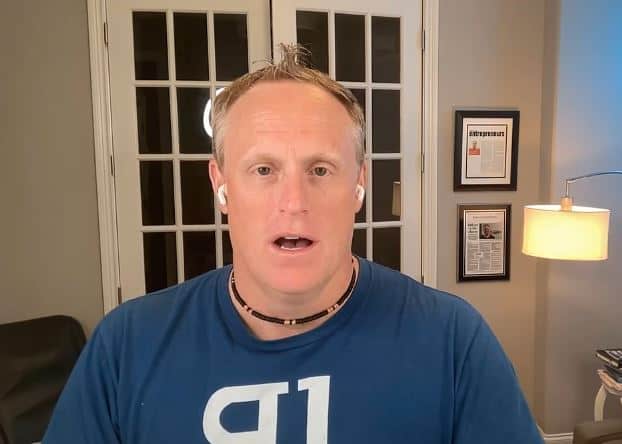
This interview sits down with Matt DeLong—algorithmic trader, platform builder, and CTO at Real Life Trading—to unpack how he designs and deploys automated strategies across stocks, crypto, and more. Matt explains the journey from a private tool to a retail-friendly platform that connects to major brokers, why he added shorting to complement long-only approaches, and how his team “eats its own dog food” by running the same strategies in live accounts. He also touches on practical operations like exiting before earnings and supporting traders who prefer set-and-forget automation over manual charting.



You’ll learn the core of Matt DeLong’s playbook: trend-following logic that adapts long or short, the timeframes he favors (think 30-minute to 78-minute), and a testing pipeline that starts with historical checks, then paper trading, and finally small-scale capital before scaling up. He breaks down beginner-friendly risk practices—like allocating 10% per position, starting with ~60–75% of the account, and ratcheting exposure as gains accrue—plus common pitfalls (chop, hard-to-borrow shorts, overfitting to one big trade) and how to avoid them. The takeaways are actionable whether you code your own scripts or subscribe to a managed list: define rules tightly, measure against buy-and-hold, monitor the equity curve, and let the bot stay in winners until the trend bends.


















Matt DeLong Playbook & Strategy: How He Actually Trades
The Markets He Touches and When He Trades Them
Matt focuses on liquid names where bots can execute cleanly without slippage wrecking the edge. He prefers intraday trend structure that’s visible and testable, then lets automation do the heavy lifting. Here’s how he frames market choice and timeframes so signals are clear and scalable.
- Trade liquid stocks, major ETFs, and top-tier crypto pairs; avoid thin names and anything with erratic gaps.
- Default to 30-minute through 78-minute charts for signal generation; confirm direction with the next-higher timeframe.
- Require average daily dollar volume > $20M (stocks/ETFs) or top-10 volume rank (crypto) before allowing a symbol in rotation.
- Ban tickers two days before earnings or major scheduled events and re-enable the morning after the event gap stabilizes.
- Use session hours aligned to the instrument (regular market hours for stocks; 24/7 for crypto with a weekly maintenance window).
The Core Setup: Rules, Not Vibes
He builds bots around simple, durable trend logic that survives regime shifts. Indicators are there to encode behavior, not to predict the future. Keep it simple, keep it testable, and make every rule unambiguous.
- Define trend with two EMAs (fast 10, slow 30) plus an ATR(14) volatility filter; only trade when ATR > 20-day median.
- Long bias when EMA10 > EMA30 and price above a 20-period baseline; short bias when the opposite holds and borrow is available.
- Block signals inside a volatility squeeze (Bollinger Bandwidth < 6-month median) to reduce chop.
- Enforce a minimum bar age: trend must persist for at least 3 closed bars before the first entry is eligible.
- One setup per symbol at a time; no overlapping positions in the same direction.
Entries That Don’t Chase
Entries aim to join trends without paying the “FOMO tax.” He prefers limit or stop-limit logic that triggers only when the move proves itself.

- Long entry: stop-limit one tick above the signal bar high if trend conditions hold at bar close; cancel if not filled by the next bar.
- Short entry: mirror the above one tick below the signal bar low, borrow check required at order time.
- Reject entries when bar range > 2.5× ATR(14) (exhaustion) or when distance from EMA20 > 2× ATR(14) (overextension).
- Stagger up to three units per symbol: 40% initial, 35% add-on +1× ATR progress, 25% add-on +2× ATR progress.
- Hard cap slippage assumption to 0.05% (liquid stocks/ETFs) and 0.10% (crypto) in testing and live risk calcs.
Exits, Stops, and Letting Winners Run
Matt’s edge comes from durable exits that keep him in the move and out of churn. Stops are volatility-based; profit management trails structure, not arbitrary targets.
- Initial stop: 1.5× ATR(14) from entry (longs below, shorts above).
- Trailing stop: ratchet to the lowest (for longs: highest) of EMA20 or 2.5× ATR(14) from the most favorable price once trade is +1× ATR in profit.
- Structure stop: exit on a full close beyond EMA30 against the position direction.
- Time stop: if trade makes no forward progress (≤ +0.5× ATR) after 8 closed bars, flatten and free the slot.
- Pre-event exit: close all open positions in that ticker by the prior session close before earnings or scheduled catalysts.
Position Sizing and Account Allocation
He sizes so the bot survives losing streaks and scales up only when the equity curve proves it. The idea: small risk, many iterations, compounding via adds.
- Risk per trade: 0.5% of account per initial unit; total risk per symbol (after adds) capped at 1.0%.
- Per-position capital cap: 10% of account notional; portfolio initial deployment 60–75% of account until live win-rate matches test.
- Max concurrent positions: 8 (stocks/ETFs) or 5 (crypto) to keep monitoring and borrow logistics clean.
- Reduce size by 50% during elevated event windows (CPI/FOMC day for stocks; major network upgrades for crypto).
- When rolling to higher size tiers, require three conditions: drawdown < 5%, profit factor ≥ 1.4, and ≥ 200 closed trades at current size.
Portfolio Construction and Symbol Rotation
Diversification is by underlying and direction, not by indicator flavor. He spreads exposure so one theme can’t sink the ship.
- Limit to two highly correlated tickers at once (e.g., SPY/QQQ counts as one bucket).
- Directional balance: no more than 60% of exposure in the same direction across the whole book.
- Weekly symbol screen: include only names passing liquidity and borrow checks, and with ATR percentile between 40th and 90th.
- Use a “strike list” for symbols that triggered two time-stops in the last 20 sessions; deprioritize for one week.
Shorting Mechanics and Borrow Friction
Shorts are part of the edge when trends turn down, but only if the borrow is there and costs don’t crush returns.
- Pre-check hard-to-borrow status; if locate fee > 5% annualized equivalent or borrow unavailable, block shorts for that symbol.
- Widen short entries by 0.25× ATR to avoid whipsaw from bid/ask spread expansion on sells.
- Trailing on shorts uses the same ATR/EMA framework; do not tighten uniquely for shorts unless volatility spikes > 2× 20-day median.
Automation Pipeline: From Idea to Live Capital
His workflow reduces the odds of shipping something unready. Each gate forces the strategy to prove itself before real money sees it.
- Phase 1: Historical test over multiple regimes; require ≥ 1,000 trades, PF ≥ 1.4, max DD ≤ 15%, and MAR (CAGR/DD) ≥ 0.5.
- Phase 2: Forward test in paper for 30 trading days; require live slippage within 2× the historical assumption and < 5% missed signal rate.
- Phase 3: Live with small size (25–33% target size) for 100 trades; if metrics hold, scale to full plan.
- Lock deployment until equity curve > 50-bar EMA of equity; pause trading when equity curve < 50-bar EMA by 2% (equity-curve filter).
- Version control: only one change per release cycle; after any rules change, reset to Phase 2 for 10 sessions.
Risk Controls, Circuit Breakers, and “Don’t Die” Rules
He treats survival as a requirement, not a preference. When things go wrong, the bot stands down fast.
- Daily loss limit: 2% of account; stop new entries once hit and flatten at close.
- Per-strategy circuit breaker: if three consecutive trades each lose > 1× ATR, pause that strategy for 2 sessions.
- Portfolio drawdown stops trading new signals at −8% and resumes only after a +3% recovery from the trough.
- Slippage shock rule: if realized slippage > 3× assumption on two trades in a session, switch entries to stop-limit only and halve sizes.
Execution Details That Add Up
Small execution choices compound to material edge. He standardizes them to avoid “human-in-the-loop” mistakes.
- Orders route as stop-limit with a protective price band of 0.15% for stocks/ETFs and 0.25% for crypto.
- All orders are placed at the bar close signal; no intrabar overrides.
- Use OCO brackets so initial stop and trailing logic are live immediately upon fill.
- Force partial fills to respect max risk: if only 60% fills, adjust stops and adds to keep dollar risk constant.
Dealing With Chop and Sideways Markets
Chop is where trend-followers donate. Matt adds filters and throttles frequency until conditions improve.
- Engage only when ATR > 20-day median and EMA10/EMA30 separation exceeds 0.25× ATR.
- Skip trades if the last five bars overlap > 60% of their ranges (overlap heuristic).
- If two time-stops occur within 10 bars on the same symbol, suspend that symbol for 5 sessions.
Metrics He Monitors and When He Adjusts
He measures what matters, so tweaks aren’t guesswork. Adjustments are schedule-based, not emotional.
- Track: win rate, average win/average loss, PF, expectancy per trade, and heat (gross exposure) by symbol and direction.
- Compare the strategy equity curve versus buy-and-hold for the same symbols; require excess return during volatile regimes.
- Review weekly: if expectancy falls below +0.10R for two weeks, cut size by 25% and investigate slippage, borrow, or filter thresholds.
Practical Starting Plan for New Users of This Framework
If you’re new, keep the rules intact and start small. The goal is to learn the rhythm, not to maximize return on day one.
- Begin with one or two symbols that pass the liquidity and ATR filters; cap to two concurrent positions.
- Use 0.25–0.5% risk per trade and deploy 60% of your account at most while you validate execution quality.
- Keep a simple journal with entry reason, ATR, EMA state, and whether a time-stop or structure-stop closed the trade; review weekly and adjust only on the weekly schedule.
Size risk is small, let winners compound with ATR-based adds.
Matt DeLong keeps his edge by risking small on the first unit and proving the trade before scaling. He treats initial risk like a cover charge—affordable, repeatable, and never big enough to ruin the night. The add-ons only come after the trade moves a full ATR in his favor, which means momentum—not hope—is paying for the next ticket. By letting the market fund each add, he avoids the classic trap of going “all in” on unconfirmed ideas.
He also spaces adds at clear ATR milestones so the position grows with trend strength, not emotion. Stops trail with volatility as size increases, keeping the total dollar risk contained even while the position gets larger. When a move stalls, he stops adding and lets the existing risk controls do their job, taking the small loss or banking a partial win. This way, Matt DeLong compounds only when the market says “yes,” and keeps losses tiny when it says “no.”
Trade rules, not vibes: EMA trend filter beats prediction
Matt DeLong is blunt about it: prediction is entertainment, rules make money. He uses objective trend filters so the bot trades only when the path of least resistance is obvious. By anchoring decisions to simple moving relationships, he strips out second-guessing and the emotional yanks that come with headlines. The result is a process that’s consistent on good days and survivable on bad ones.
In practice, Matt DeLong favors a fast EMA crossing and holding above a slower EMA to define long bias, with the inverse for shorts. Signals are taken only on closed candles, after the trend has persisted for a few bars, to avoid whipsaw. If volatility compresses or bandwidth falls below a threshold, he simply stands down rather than “forcing” a read. Exits are equally rule-based—give back the trade on a clean close through the slow EMA or when a volatility stop gets tagged. This rules-first approach keeps the bot from chasing noise and lets the equity curve benefit from extended, rule-confirmed trends.
Diversify by underlying, strategy, and duration to smooth the equity curve.
Matt DeLong spreads risk across symbols, setups, and time horizons so no single idea can hijack results. He’ll pair a stock trend-follower with a crypto momentum bot and a mean-reversion filter on index ETFs, letting different edges work in different tapes. By mixing 30–78 minute systems with swing holds that can last days, he avoids being overexposed to one regime or session. When tech chops, a commodities or index sleeve can still carry the load, and when momentum dries up, a slower strategy keeps putting points on the board.
Matt DeLong also limits correlation clusters so SPY, QQQ, and NVDA don’t all count as three separate “bets.” He caps exposure per theme, keeps directions balanced, and rotates tickers weekly based on liquidity and volatility health. That way, losing streaks get absorbed by uncorrelated winners instead of cascading through the whole book. The outcome is a steadier equity curve that grows by many small, independent contributors rather than one hero trade.
Use volatility gates to avoid chop and throttle trade frequency.y
Matt DeLong treats volatility like a traffic light: green means trends have room to run, yellow means proceed carefully, and red means step off the gas. He measures ATR versus its recent median to decide if the market is “awake” enough to justify risk. When ATR collapses or band compression tightens, Matt DeLong simply blocks new signals because chop tax is real and paid with slippage and time-stops. He also requires the trend to persist for a few closed bars before engaging, so one noisy spike can’t bait the bot into a dead zone.
When volatility returns, he opens the gates gradually and limits first entries to small risk until the tape proves itself. If the overlap between recent bars exceeds a threshold, he throttles frequency by skipping the next signal and re-checking conditions. During event weeks, he widens filters and reduces size, letting the system survive surprise gaps without giving back hard-won gains. This disciplined gating keeps trades clustered in the parts of the day and regime where movement pays, and off when the market is whispering instead of shouting.
Protect downside with defined stops, circuit breakers, and event rules.
Matt DeLong builds the “don’t die” layer right into his playbook, so every trade starts with a defined exit before it has a chance to hurt. He anchors initial stops to volatility—far enough to avoid noise, close enough to cap pain—and then lets a trailing mechanism take over as profit develops. When three losses stack quickly or slippage spikes beyond normal, Matt DeLong triggers circuit breakers that pause entries and force a system check. That way, the account survives tape changes without guessing whether the next trade will be the one that fixes everything.
He also respects scheduled landmines. Ahead of earnings, macro prints, or known protocol events, Matt DeLong flattens exposure or reduces size, because gap risk isn’t part of the edge he’s trying to harvest. Daily loss limits stop the bleeding if a session goes sideways, and portfolio drawdown levels throttle risk until the equity curve recovers. The result is a framework where risk is pre-agreed, responses are automatic, and capital is preserved for the times when trends actually pay.
In the end, Matt DeLong’s playbook boils down to disciplined trend-following, tested on the right timeframe for each symbol, and executed with rules that keep him in winners and out of chop. He emphasizes that some tickers simply trend better on specific intervals—think 30-minute or 78-minute—while others (like Apple) are best left to buy-and-hold, and he uses historical checks to decide where active long/short trading beats passive exposure. When markets whipsaw, he accepts drawdowns as a cost of doing business, avoids constant “retools,” and lets the system regain ground once a directional move reasserts for a few sessions.
He builds for real-world constraints: in a retirement account, he’ll mimic short exposure with inverse ETFs, while in brokerage accounts, he’s comfortable flipping long/short as the tape turns. On the tech side, he’s platform-minded—happy to prototype in Pine Script, MetaTrader, or Python, then route signals into a broker-connected system with allocation controls—so ideas can graduate from code to live execution cleanly. Finally, Matt’s broader ethos shows up in how he operates: as CTO at Real Life Trading, he scales tools and education globally, and he channels success into philanthropic work—clear signs that process and purpose matter as much as P&L.