Table of Contents
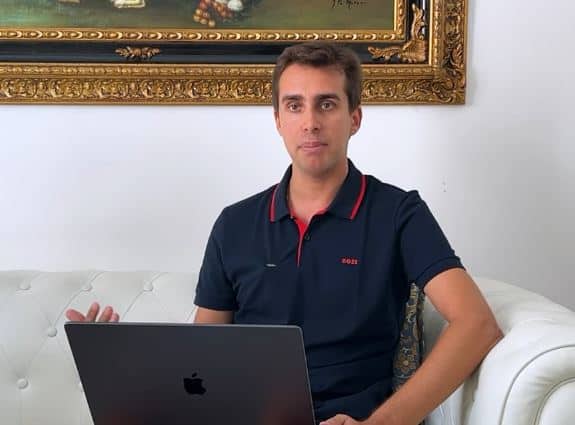
In this interview, I’m sitting down with Andrea Gabrieli—a part-time trader and full-time scientist—who turned a small account into six figures by building a process that actually survives changing markets. A student of Timothy Sykes, Andrea trades small caps with a “retired trader” mindset: watch patiently, act only when the setup is so good you’d feel guilty missing it. From Hawaii’s early market hours to spreadsheets that track patterns, emotions, and outcomes, his story shows why method beats momentum.



Read on to learn Andrea’s practical playbook: how he identified overnight holds and pre-market dip buys as an edge, why cutting losses quickly protects confidence, and how to size up only when the stats and market context align. You’ll see exactly how he uses data to adapt as patterns rotate, how he balances trading with a demanding day job, and how tracking emotions tightens execution. If you’re building a beginner-friendly strategy that can flex with hot and cold cycles, Andrea’s framework is a clear, repeatable starting point.


















Andrea Gabrieli Playbook & Strategy: How He Actually Trades
What Markets He Focuses On (and Why)
Andrea keeps his universe tight so he can recognize repeating behavior. He looks for fresh catalysts and strong reaction-to-news dynamics, then stalks the same patterns as they rotate through cycles.
- Trade universe: recent news/earnings movers and notable PR names with elevated pre-market volume
- Prefer symbols showing a clean trend and range on the daily chart; avoid heavy long-term resistance directly overhead.
- No catalyst, no trade; if the move is headline-free, pass
- Liquidity rule: minimum pre-market volume threshold before placing any order (set a hard number and stick to it)
- Track a watchlist by catalyst type (earnings, FDA, M&A rumor, contract wins) and note which type is currently paying
The Two Core Edges: Overnight Holds & Pre-Market Dip Buys
He built his results around two simple but robust ideas: hold onto known catalysts when stats support it, and buy exhaustion dips before the open when panic meets liquidity. Both demand rules that cap downside and standardize entries.
- Overnight holds only when: strong close near HOD, clear catalyst still “live,” and supportive after-hours tape.
- Never hold overnight through unknown binary events; if the date/time isn’t clear, flatten.
- Pre-market dip buy: wait for an impulsive flush into a prior liquidity zone (VWAP/previous pre-market low), then scale in only after the first stall
- Require a snapback confirmation (higher low on 1–3 min) before adding; no confirmation, no add.
- If the spread widens or liquidity vanishes, abandon the idea—edge needs two-way flow.
Pattern Qualification Checklist
Andrea treats each setup like a lab experiment: qualify, then execute. This prevents random trades and keeps him aligned with what’s currently working.

- Daily timeframe first: Is the stock breaking out from a base/level that matters this week?
- Freshness: catalyst within the last 48 hours or a scheduled event within 5 trading days
- Intraday structure: clean waves (impulse → pullback → higher low or lower high); skip chop
- Volume profile: rising participation on pushes, controlled pullbacks; avoid thin air spikes
- Play only patterns with a>55–60% win rate in your own log over the past 3 months.
Risk & Sizing Framework
Sizing is earned by the setup, not by hope. Andrea scales risk with volatility and time of day, so one loss can’t derail the week.
- Define max account risk per day (e.g., 1R–1.5R of your normal trade risk); stop trading at that limit.
- Per-trade risk caps to the technical invalidation, not a round number; if the stop is too wide, reduce the size or pass
- Size down during lunch hours and after the first loss; size up only after a clean A-setup win
- Use OCO (bracket) orders where possible: stop at invalidation, target at the next liquidity shelf.
- Never add to losers; adds are reserved for confirmed reclaims (prior low reclaimed and held)
Long Playbook: Earnings/PR “Reaction to News”
When a real catalyst hits and buyers crowd in, he lets the tape show its hand before stepping in. Strength that holds levels earns risk.
- Entry trigger: reclaim of pre-market VWAP or prior high with volume expansion
- First target: pre-market high or measured move equal to the morning range; trail remainder below higher lows
- Invalidation: loss of reclaim level on expanding downside volume
- If price extends >3 ATR from open without bases, wait for the first proper pullback; skip chasing
- Take partials into predictable liquidity (whole/half-dollar levels, opening range extremes)
Long Playbook: Pre-Market Panic Dip Buy
The best dips are fast, scary, and into known demand. He aims where trapped shorts must cover and late longs panic out.
- Map pre-market support bands from prior lows and volume shelves before the open.
- Entry: partial at first stall, add only after a higher low forms; never all-in on the first knife.
- Stop: a few ticks beyond the panic low; if immediately re-breached, exit and reassess later.
- Target: VWAP tag or 50–100% retrace of the flush; scale out on the way to VWAP
- No trade if spread > your stop size or if liquidity vanishes after entry
Short Playbook: Faded Hype After the Pop
He will fade when the data says the crowd is late and the tape confirms exhaustion. Confirmation matters more than opinion.
- Require a failed breakout (wick above pre-market high that closes back inside the range)
- Entry on lower high under the failure level; starter first, add on breakdown retest that holds
- Cover into the first flush; leave a runner toward prior consolidation or gap-fill
- Invalidation: reclaim and hold above failure level with volume; exit—no “it should come back”
- Avoid fresh catalysts that keep refueling the move; short “story” only when the story is fading
Time-of-Day & Session Rules
Session context shapes his aggression. He uses time to filter trades and avoid low-quality noise.
- Pre-market: trade only pre-planned dip-buys or level reclaims; no improvisation
- First 30–90 minutes: highest aggression window for A-setups; B-setups become passes
- Midday: cut size in half or stand down; focus on planning and logging
- Power hour: revisit morning leaders for secondary setups only if volume returns
- After-hours: manage positions; initiate new risk only with exceptional catalysts
Data, Tracking, and Iteration
Andrea’s edge compounds through tracking. He treats every trade as a data point that either funds or refines the playbook.
- Maintain a spreadsheet with: setup tag, catalyst type, time-of-day, entry/exit rationale, R result, screenshots.
- Compute rolling 20-trade stats per setup; pause any tag that drops below your threshold (e.g., win rate <50% or EV < 0)
- Review weekly: top 3 P&L drivers, worst 3 time-of-day windows, and any drift from rules.
- Promote size only after 3–5 consecutive A-setup wins with clean execution notes.
- Archive “dead” patterns; revisit monthly to check if they’ve rotated back in
Psychology & Execution Hygiene
Consistency comes from reducing decision load. He installs habits that make the right action the easy action.
- Pre-define three outcomes before entry: full win, base hit, scratch; know where each occurs
- Use “if/then” scripts: if reclaim fails twice, then stand down for 30 minutes.
- One trading screen for entries, one for levels; hide P&L during decision points
- After a rule break, immediately micro-timeout (e.g., 15 minutes) and log the trigger in plain language
- Protect sleep and routine around early sessions; fatigue tax is real and compounds.
When to Stand Down
Not trading is a position. He preserves capital and focus for when his patterns are actually paying.
- Skip days with no clear catalysts or when leaders are choppy with low volume.
- Stop for the day after two consecutive rule-compliant losses or max daily R hit.
- Pass any setup that requires “exception” logic to justify the trade
- If spreads widen or halts/liquidity risks dominate, reduce playbook to only the highest-confidence entries
- After large wins, size down next session to avoid “house-money” sloppiness
Size Risk Like a Scientist: One R, Tight Invalidation, Zero Hope
Andrea Gabrieli treats risk like a lab variable—defined before the experiment starts, unchanged once the beaker bubbles. He picks a fixed “1R” per trade based on account size and current volatility, then places the stop exactly at technical invalidation, not a round number. If the setup requires a stop so wide that size would be reckless, he simply reduces the size or passes. No averaging down, no moving the stop, no “it’ll come back.”
He also scales exposure to the market’s mood, not his own: higher volatility means smaller size, quieter tapes allow a touch more. Andrea only adds to winners after objective confirmation—reclaim, higher low, or volume-backed level—so risk expands with proof, not pain. The daily loss cap is sacred; hit it and he’s flat for the session to protect confidence and the next A-setup. Every trade is just one bet from a long series, so preserving R is the strategy, not an afterthought.
Pre-Market Dip Buys and Overnight Holds: When to Press, When to Pass
Andrea Gabrieli treats the pre-market like a hunting window, not a casino—he maps prior lows, VWAP, and volume shelves, then waits for panic to smack into those levels. He buys only after a genuine stall and a higher low forms, never on the first knife. If spreads are wider than his intended stop, he skips it—execution quality comes before FOMO. First target is the VWAP tag; if momentum fades on the way there, he scales out and walks.
Overnight holds are earned, not assumed. Andrea only carries when there’s a live catalyst, a strong close near highs, and clean after-hours tape that confirms demand. Binary events with unknown timing are a hard no—uncapped gaps break playbooks and confidence. If any of those conditions slip by the close, he presses the eject button and resets for the next clean shot.
Trade the Mechanics, Not Your Opinions: Catalyst, Liquidity, Level, Execution
Andrea Gabrieli doesn’t “predict”—he checks four switches: catalyst, liquidity, level, execution. If there’s no fresh reason for attention, he passes, even if the chart looks tempting. He wants two-way flow and tight spreads so he can enter, exit, and scale without slippage drama. Only when price is reacting cleanly at a mapped level—VWAP, prior high/low, volume shelf—does he even think about pulling the trigger.
Execution is where bias dies. Andrea waits for a concrete signal (reclaim, higher low, lower high) and puts the stop exactly at invalidation, not “somewhere safe.” If the tape stops behaving—volume dries up, spreads widen, levels stop respecting—he cancels the plan without apology. The market pays for mechanical discipline, not clever narratives, and Andrea’s edge lies in doing the boring steps perfectly every time.
Volatility-Based Sizing and Scaling: Add on Confirmation, Never on Pain
Andrea Gabrieli sizes positions to the tape, not to his mood. When range and ATR expand, his per-trade size contracts; when volatility compresses, he allows slightly larger size but keeps stops at true invalidation. He never adds while a trade is red—adds only follow proof like a higher low, a level reclaim, or a volume-backed hold at support.
Scaling is a staircase, not an elevator. Andrea builds a starter at the signal, a second unit on confirmation, and a final add only if the structure strengthens again; any failure to confirm cancels the add. If volatility spikes mid-trade—spreads widening, erratic prints—he instantly downshifts size or takes partials to keep R contained. The message from Andrea Gabrieli is simple: let volatility dictate your risk, and let confirmation earn your size.
Diversify by Setup, Session, and Catalyst Type to Smooth Equity Curve
Andrea Gabrieli doesn’t rely on one trick; he spreads his bets across setups that fire at different times of day and under different conditions. He rotates between pre-market dip buys, regular-session reclaims, and afternoon continuation plays, so no single window can make or break his week. By mixing earnings, PR, and regulatory catalysts, he avoids overexposure to any one “story” going cold. The result is a steadier P&L because at least one lane usually has traction.
He also staggers risk across A and B setups, giving the largest size only to patterns that are currently paying while keeping testers small and quick. When a catalyst bucket cools off, Andrea Gabrieli benches it without emotion and shifts focus to the buckets showing clean tape. He tracks which sessions and catalysts are producing, then leans into those until the data changes. Diversification for him isn’t owning more trades; it’s owning the right mix so volatility in one lane is cushioned by strength in another.
Andrea Gabrieli’s edge is the mix of a scientist’s patience and a trader’s timing. He keeps a “retired trader” mindset—watching more than acting—so he’s present when patterns truly line up and unbothered when they don’t. His playbook centers on two repeatable lanes: pre-market dip buys into defined levels when panic smashes into liquidity, and selective overnight holds only when the catalyst is alive and the tape is supportive. He lets mechanics beat opinions: catalyst first, then liquidity, then level, then execution—with a stop at real invalidation and size scaled by current volatility. Living in Hawaii forced him to master time discipline, treating early sessions as focused hunting windows and sleep as part of risk management. The result is a rules-driven process that survives hot runs, cool patches, and everything in between.
For traders, the takeaways are simple and strict. Build a small universe of catalyst-driven names, track what’s paying now, and only press when the data and the tape agree. Define 1R before entry, cap the day, and let confirmation—not hope—earn your ads. Favor pre-market dips with clear snapback cues; avoid mystery gaps and unknown binaries overnight. Rotate among setups, sessions, and catalyst buckets so a single lane can’t sink the week. Above all, follow Andrea Gabrieli’s example: log relentlessly, iterate by statistics, and make the boring, mechanical choice the default every single time.