Table of Contents
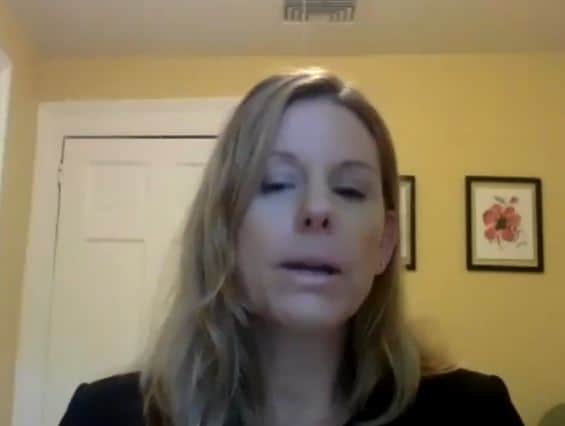
This interview features Courtney Kurisko, a New York–based CPA who specializes in day traders and active investors. She’s helped traders for years navigate IRS rules, trader tax status, and the real-world setup choices that keep more profits in your pocket. If you’ve wondered whether you qualify as a trading business, when Section 475(f) mark-to-market makes sense, or how to avoid costly filing mistakes, Courtney is the voice you want in your corner.



In this piece, you’ll learn exactly how Courtney thinks about qualifying for trader status (frequency, continuity, and intent), the pros and cons of electing mark-to-market, what wash-sale relief really changes, and when to use an entity versus a sole proprietorship. You’ll also see the deductions traders routinely miss—platforms, data, home office, equipment—and the documentation habits that make audits boring and painless. By the end, you’ll know the strategy to structure your trading like a real business and file with confidence.


















Courtney Kurisko Playbook & Strategy: How He Actually Trades
Qualify as a real “trader” (not just an investor)
Before any tax edge kicks in, you need to be treated as a trading business. Courtney Kurisko stresses frequency, continuity, and a clear intent to profit from short-term price moves—not long-term appreciation. Nail this foundation, and everything else (deductions, elections, entities) actually works.
- Trade on most market days with meaningful volume (think hundreds of orders per year, not dozens).
- Keep holding periods predominantly short; avoid a portfolio that looks like buy-and-hold.
- Maintain a documented plan: instruments, time frames, entry/exit logic, and risk rules.
- Use dedicated tools (broker platform, data, journal) and work regular hours to show continuity.
- Separate “trading” from “investing” accounts to avoid mixing long-term holdings with active strategies.
When Section 475(f) mark-to-market is the edge
This is the election that can turn capital losses into ordinary losses and wipe out wash-sale headaches on securities. Courtney’s framework: run the math first, then elect on time—because deadlines are strict and revoking later is hard.
- Elect 475(f) before the year starts: for individuals, file the election statement by the original due date of the prior year’s return (no extensions).
- New entities can elect within 2 months + 15 days of formation.
- Understand effects: securities gains/losses become ordinary; wash-sale rules on securities no longer apply.
- Don’t elect on Section 1256 contracts (they’re already marked to market with 60/40 treatment).
- Run scenarios: ordinary loss benefits vs. losing lower long-term rates in green years.
Entity setup that actually saves money (when it’s worth it)
Courtney doesn’t push entities for vanity. The play is using an S-Corp only when you’re consistently profitable and need “earned income” for retirement/health deductions—without creating unnecessary payroll overhead.

- Start as a sole proprietor once you qualify as a trader; add an S-Corp after you’re reliably net positive.
- If using an S-Corp, pay yourself a reasonable W-2 salary to unlock solo-401(k) and health-insurance deductions.
- Keep trading in a brokerage titled to the entity (or a compliant setup) once you switch—don’t mix personal and entity trades.
- Revisit state taxes, payroll filings, and compliance costs annually; if P&L dips, consider dropping back to Schedule C.
Deductions traders miss (and what not to deduct)
Trading businesses can deduct ordinary and necessary expenses tied to the operation. Courtney Kurisko is blunt: be aggressive on legit costs and disciplined about gray areas.
- Deduct: platform fees, market data, news terminals, scanners, subscriptions, VPS/latency tools, journals, and allocable internet/phone.
- Home office: exclusive/regular use, measured by square footage; keep photos and a floor-plan note.
- Gear: computers, monitors, routers, UPS; choose Section 179/bonus or depreciation based on cash flow.
- Education: refreshers and skill-maintenance are safer; “qualifying for a new career” courses are not.
- Travel/meals: only for bona fide business reasons (conferences, due diligence meetings, firm visits) with receipts and agendas.
Clean books that survive an audit
Courtney’s mantra: make your records boring. If your numbers reconcile and your logs are airtight, exams are short and uneventful.
- Reconcile brokerage 1099s, monthly statements, and your trade ledger; no unexplained gaps.
- Keep a daily journal: instrument, setup, risk, entry/exit, slippage, and reasoning.
- Archive broker confirms, K-1s (if any), entity payroll records, and annual elections.
- Use a dedicated accounting file for trading—separate from personal expenses—and lock each month after reconciling.
- Snapshot settings: platform time zone, commissions schedule, and fee tiers.
Quarterly estimates and cash-flow discipline
Winning traders still get crushed by penalties when they ignore estimates. Courtney’s rule: automate safe-harbor payments and avoid surprises.
- Make four estimated payments (generally Apr, Jun, Sep, Jan); set calendar reminders and auto-pay.
- Use safe harbor: pay 100% of last year’s total tax (110% if prior-year AGI > $150k) or at least 90% of current-year tax.
- Skew payments to big months: top up the very next quarter after a banner run to avoid underpayment interest.
- Track state estimates separately; many states have different thresholds and due dates.
Retirement moves for traders (even with no “job”)
Traders don’t get a boss funding a 401(k), so Courtney builds “earned income” on purpose to supercharge tax-advantaged savings. This is where the S-Corp salary earns its keep.
- Use a solo 401(k) when you have W-2 wages from your S-Corp: contribute employee deferrals up to the annual limit, plus employer profit-share up to the combined cap.
- If no payroll, traditionalRothh IRA limits may still apply, but you’ll miss the larger shelter plan.
- Keep plan docs, adoption dates, and timely filings (Form 5500-EZ when required).
Prop-firm payouts and funded accounts
If you use prop firms, Courtney treats the cash the same way the IRS does: it’s income, and it’s traceable. Build the paper trail, then optimize the taxes you actually control.
- Expect 1099 reporting for payouts; report all income, even if a form never arrives.
- Track fees (evaluations, resets, platform) and chargebacks separately so deductions are clear.
- If prop income is your main stream, consider entity + payroll to access retirement/health deductions.
- Document relationships and contracts; keep copies of invoices and payout statements.
State taxes and residency reality checks
Your federal plan can be perfect and still leak at the state level. Courtney’s playbook is to know your residency rules cold and avoid accidental nexus.
- Confirm your domicile and statutory residency tests (days in state, place of abode).
- If trading through an entity, watch for payroll and office presence that create state filing requirements.
- Track moves mid-year: split-year returns, part-year residency, and city taxes (NYC/PHL/SDI) can change your total bill.
Risk controls that make taxes easier
Ironically, the trading rules that protect P&L also make tax time simple. Courtney Kurisko leans into structure so the numbers tell the same story as your journal.
- Standardize position sizing (e.g., fixed R or volatility-scaled) so realized P&L variance is explainable.
- Cap simultaneous strategies per account to keep reporting clean (e.g., futures in one, equities in another).
- Use consistent ticker symbols and product codes; avoid exotic instruments that your broker reports inconsistently.
- Freeze strategy changes in the last two weeks of December unless tax-motivated and well-documented.
Size Risk First: Fixed-R Entries That Keep Drawdowns Contained
Courtney Kurisko’s first principle is simple: decide the dollars you’ll risk before you even think about potential profits. By locking each trade to a fixed-R amount—say $200 per idea—you turn wild market swings into controlled experiments with known downside. This keeps you from “sizing by feeling,” which Courtney argues is the fastest path to inconsistent results. With a fixed-R, your winners and losers are apples-to-apples, so streaks don’t trick you into overbetting when confidence is high or underbetting when fear creeps in.
In practice, Courtney Kurisko translates fixed-R into concrete placement of stops and share size, calculated backward from the max-loss number. If a setup needs a wider stop because volatility expands, the position shrinks automatically; if volatility compresses, size scales up without changing the per-trade risk. That math keeps drawdowns smoother and makes risk-of-ruin calculable rather than guesswork. Over time, this discipline sharpens your edge because your strategy’s performance isn’t drowned out by random bet sizing.
Volatility-Based Allocation: Scale Position Notional To Daily ATR Rhythm
Courtney Kurisko treats volatility as the metronome for sizing, using ATR or average true range to translate chart noise into dollars. When the daily ATR expands, she cuts notional so that the distance to the stop—measured in ATR units—still equals her fixed risk. When ATR contracts, she allows more shares or contracts, keeping the same per-trade dollar risk while letting tight ranges work for her.
The beauty, according to Courtney Kurisko, is that this turns “wild market” and “quiet market” into the same game with different settings. A common rule is risk 1R on a stop of 1–1.5 ATR, adjust position size until R equals the preset dollar amount. This keeps win rate and expectancy meaningful across regimes, avoids accidental leverage spikes, and reduces the odds of one high-volatility outlier wrecking the month. It’s disciplined, math-first, and it makes every setup comparable regardless of the market’s mood.
Diversify By Underlying, Strategy, And Duration To Smooth the Equity Curve
Courtney Kurisko pushes diversification beyond “own more tickers.” She breaks risk across different underlyings (equities, futures, options), distinct strategy types (trend, mean reversion, breakout), and multiple holding durations (intraday, swing, position). That mix reduces correlation clusters—when one style stalls, another can carry the load. Courtney Kurisko frames it as smoothing the equity curve so psychology stays steady and the process doesn’t get ripped up after a bad week. The goal isn’t to chase everything, but to run a few uncorrelated edges well.
In practical terms, Courtney Kurisko suggests capping exposure per bucket so no single theme dominates the book. Pair fast strategies with slow ones, and avoid stacking similar signals that all die the same way. Track rolling correlations of returns by strategy and by instrument; if two “different” systems are 0.8 correlated, they’re basically one bet in disguise. Rotate capital toward the buckets with current positive expectancy while enforcing a maximum allocation per style to prevent drift.
Mechanics Over Predictions: Preplanned Entries, Exits, And Post-Trade Reviews
Courtney Kurisko makes a clear distinction between having opinions and having rules. She preplans entries, stop levels, and scale-out points before the order ever hits the tape, so intraday noise can’t bully her into improvising. If price never gives the trigger, she doesn’t chase—no trigger, no trade. The edge lives in repeatable mechanics, not in guessing where the market “should” go.
Once in a position, Courtney Kurisko manages by checklist, not vibes: move stops only for structural reasons, honor time stops when momentum fades, and take profits according to the plan. After the trade closes, she conducts a fast post-mortem to score setup quality, execution fidelity, and emotional drift. That review feeds a small set of rule tweaks, not wholesale reinvention after a single loss. By prioritizing mechanics over predictions, she converts uncertainty into a workflow that compounds discipline as much as capital.
Define Your Risk: Hard Stops, Max Loss, And Daily Cutoffs
Courtney Kurisko insists that risk isn’t “managed” after entry—it’s defined before the click. Every trade starts with a hard stop at a price level that invalidates the idea, not a number chosen to “feel safe.” She also sets a per-trade max loss in dollars and a daily cutoff that shuts the platform if hit. That way, a single bad morning can’t snowball into a career-threatening afternoon.
In execution, Courtney Kurisko treats the stop as a rule, not a suggestion: no widening, no “one more tick,” no hoping. She uses a session drawdown limit (e.g., 3R or a fixed cash amount) and a weekly cap to force recovery to happen tomorrow, not today. If slippage occurs, she logs it and shrinks the size until the fills stabilize. The combination of hard stops, daily cutoffs, and session caps keeps losers small and boring—so the strategy, not emotions, decides the month.
Courtney Kurisko’s bottom line is that trading becomes a real business when you prove it with behavior, records, and structure. She emphasizes showing up consistently, logging frequent trades, and keeping your active accounts separate from long-term investments so your intent to profit from short-term moves is unambiguous. From there, she pushes traders to model whether a Section 475(f) mark-to-market election is worth it: ordinary loss treatment and relief from wash-sale rules on securities can be powerful, but only if you file on time and understand the trade-offs. She also distinguishes securities from futures/1256 contracts, since they already have mark-to-market and blended 60/40 treatment, which changes the calculus.
On setup, Courtney Kurisko treats entities as tools, not trophies. Start simple; consider an S-Corp only when you’re sustainably profitable and want earned income for solo-401(k) and health-insurance deductions via reasonable payroll. She walks through deductions traders chronically miss—platforms, data, gear, and a properly documented home office—and stresses clean, boring books: reconcile statements, archive confirms, and journal every trade so audits are quick and drama-free. Finally, she’s adamant about cash-flow discipline: make quarterly estimates using safe-harbor rules, mind state residency and nexus traps, and keep airtight paper trails for things like prop-firm payouts or education expenses. Do those things, and your tax posture stops leaking edge—letting your actual strategy, not paperwork mistakes, decide your year.

Related posts:
- Courtney Smith Trader Strategy: The Macro-Tech Edge You Can Actually Use
- John Kurisko Trader Strategy: The Simple Momentum Setup Any Trader Can Master
- John Kurisko’s Trader Strategy: How He Uses Stochastics for Consistent Profits
- John Kurisko Trader Strategy: Discipline, Divergences, and the MES Edge
- John Kurisko Trader Strategy: How a DayTradingRadio Pro Turns Setups into a Business
- Kimmel Trading vs Signals: A Trader Strategy Deep-Dive
- Mayfair Mindset: Trader Strategy From the Trading Floor Interview
- Ceri Bryans Trader Strategy: From Backtesting to DAX Day Trading Discipline
- Alyse Amores Trader Strategy: Risk-First Liquidity Trading That Actually Scales
- Karen Foo Trader Strategy: Mindset, Risk, and Swing-Trading Discipline
- Scott Andrews Trader Strategy: The Quant Rules Behind His Day-Trading Edge
- Crypto Trader Strategy: How “Trading Wizard” Turns Conviction Into X-Factor Gains