Table of Contents
In this interview, equities options trader Umar Ashraf breaks down how he turned years of public wins and bruising drawdowns into a repeatable trading business—complete with transparent P&Ls and the product mindset behind TradeZella. You’ll hear why he prizes “reps” over theory, why big losses drain mental capital more than dollars, and how he filters out social media noise to focus on a simple edge executed with discipline.



Read on to learn the core of Umar’s strategy: write a daily game plan, journal ruthlessly, classify lucky wins as “bad trades,” and size options positions within real liquidity so execution stays clean. We’ll unpack his year-by-year lessons (including climbing back from a public max loss), his criteria for scaling risk, and the mindset that keeps him selective when he’s hot and steady when he’s cold—so you can apply the same process to your own trading without the fluff.


















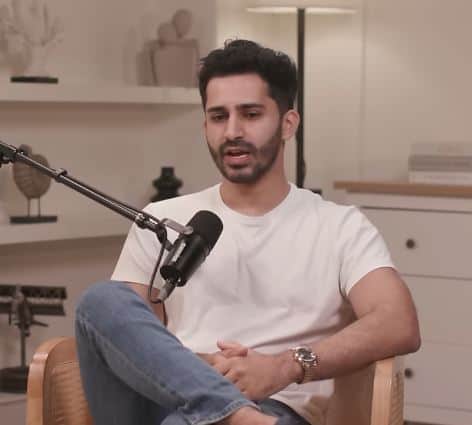
Umar Ashraf Playbook & Strategy: How He Actually Trades
What He Trades and Why It Works
Umar Ashraf is an options-first discretionary trader who focuses on liquid, highly traded names because clean execution beats theoretical edge. The goal is simple: put on size only where fills are instant, slippage is minimal, and the tape actually confirms the story.
- Trade options on large-cap, high-volume underlyings during peak liquidity; skip thin names even if the chart looks perfect
- Only touch contracts with tight spreads and heavy turnover; if the spread widens after entry, exit rather than “hope”
- Favor expirations with enough volume to scale in/out cleanly; avoid contracts where 5–10% slippage erases your R
- If volume dries up or fills lag, abandon the idea—poor liquidity is a valid sell signal.
Daily Prep: From Narrative to Triggers
Prep is where Umar wins before the bell. He converts the macro/stock narrative into two or three if-then scenarios with exact levels and option contracts ready to click—no guessing after 9:30.
- Pre-market: mark prior day high/low, overnight high/low, opening gap levels, and one “invalidation” per idea
- Write a one-line hypothesis for each ticker: “If we reclaim X on volume, I’ll buy the [strike/expiry] calls”
- Pre-load the order ticket (strike, expiry, quantity ladder) so execution is two clicks, not a scavenger hunt.
- Limit the board to 2–3 A-setups; kill everything else to preserve focus and reaction time.
A-Setups: Momentum With Structure
He doesn’t chase noise; he trades momentum when structure confirms. The setup lives at the intersection of trend, level, and participation.

- Only trade breakouts/breakdowns when the level is obvious to everyone and volume confirms on the break.
- Enter on the first clean retest or a strong opening drive; avoid mid-range “maybe” entries.
- If the name is trending, use pullbacks to 5–15 minute structure or VWAP reclaims for adds; never add below your invalidation.
- No signal by your time window (e.g., first 60–90 minutes)? Stand down—late entries carry worse RR and slippage.
Risk, Stops, and Position Sizing
Umar treats risk as inventory management. The number that matters is what you’re willing to lose per idea and per day, not how much you could make if it runs.
- Define dollar risk per trade before entry; if you can’t size it precisely in options, don’t take it.
- Hard daily max loss (e.g., 2–3R). Hit it and you’re done—platform closed, not “one more try”
- Initial stop lives where the idea is wrong on the underlying, not where the option premium feels scary.
- Scale size with market quality: base size on choppy days, 1.5–2× on clean trend days, 0.5× into major events unless you have a tested playbook.
Liquidity Rules for Options
Execution is part of the edge. Umar caps how much he can push through a contract before fills and spreads become the enemy.
- Trade contracts where your intended clip is ≤ 5–10% of 1-minute contract volume
- Avoid contracts with spreads wider than ~2–3% of premium; if a fill requires chasing more than one tick, reassess
- Pre-define a maximum position dollar amount; if the contract can’t absorb it cleanly, cut the size or skip the trade.
- If spreads widen post-entry, scale out to tighter strikes/expiries rather than “waiting for spreads to tighten”
Scaling In, Not Averaging Down
He adds to winners as the thesis gains confirmation. He never throws good money after bad.
- First add only after price proves your thesis (break + hold or reclaim + hold) and volume confirms
- Each add must tighten blended risk: raise stops to prior structure so total risk doesn’t expan.d
- No averaging down options—premium decay and spread risk compound against y.ou
- Cap total adds (e.g., two adds max). If you need a third, you’re forcing. it
Trade Management and Exits
Umar defines exits as clearly as entries. He pays himself into strength and refuses to give back a good idea because of greed.
- Scale out at pre-planned targets (measured move/next HTF level) while trailing a stop under the most recent structure.
- Use the underlying to manage risk; do not babysit the option premium’s noise.
- If momentum stalls at target with fading volume, take the win—don’t convert a trend trade into a hope trade
- After a partial, your stop should live where the structure breaks; never move stops away from pric.e
Hot/Cold Protocol (State-Based Sizing)
Performance comes in streaks. He protects mental capital by adapting size and frequency to his state and the market’s state.
- Hot: increase size gradually after two consecutive clean winners; keep the playbook identical, not loos. er
- Cold: cut size to 25–50%, trade first hour only, and require A+ confluence (level + volume + tape)
- Two days red or one emotional error triggers a mandatory “review day” with no live r.isk
- Weekly guardrail: if net P&L is flat to down by Thursday, Friday is a half-day with base size only
Yearly Capital and Deployment
He keeps the trading account lean enough to maneuver in options, not bloated to impress a spreadsheet. Capacity discipline beats vanity sizing.
- Start the year with a fixed operating balance aligned to options liquidity; sweep excess capital out monthly.
- Set a max position dollar cap and stick to it even during hot streaks to avoid liquidity trap.s
- If your clip begins to move the market or degrade fills, reduce size or switch to more liquid contracts/underlyings
- Growth lever is trade quality and frequency during clean regimes—not simply wiring more ca.sh
Catalyst & Event Playbook
Events are opportunity only if you’ve tested them. Otherwise they’re volatility cosplay.
- Only trade events (earnings, FOMC, CPI) with a written pattern you’ve reviewed—no first-time experiments live
- If spreads explode pre-event, trade the underlying or stand down; options edge disappears when pricing is chao.tic
- Post-event, wait for the first structure (range set) before engaging; chase only with abnormal volume and clean t.rend
- Reduce size on binary catalysts unless you have repeatable stats for that ticker and .event
Journal, Tags, and Grading
Umar’s edge compounds because he journals like an operator. He treats lucky wins as bad trades and well-executed losses as good trades.
- Log every trade with hypothesis, trigger, invalidation, size, and why you deserved the. trade
- Tag errors (late entry, chasing, liquidity slip, sizing creep) and set weekly remediation goals
- Grade trades on execution quality, not P&L; a red “A” beats a green “C”
- Convert patterns into checklists; new trades must pass the checklist before capital is committed
Psychology and Energy Management
He guards focus like capital. Over-trading and fatigue are P&L leaks.
- Pre-commit to a max number of tickets per day (e.g., 3–5). If you hit the cap, journaling replaces trading
- Use a 5-minute reset after any adrenaline spike (big win or loss) before touching anothe.r order
- Keep your decision window tight: if the setup doesn’t trigger within your planned time box, l.et it go
- Protect sleep and routine; a tired trader trades the spread, not the setup
Operator Habits That Compound
Treat the desk like a business. Systems beat mood.
- Weekly review: export stats by setup/tag; increase capital only to the setups with the best win-rate × RR
- Pre-market checklist (platform reset, hotkeys, watchlist, news scan, levels, tickets pre-staged)
- End-day checklist (journal, screenshots, error tags, next-day scenarios, capital sweep if thresholds met)
- Run “fire drills”: practice flattening size quickly in illiquid moments so the muscle memory is automatic
Size Risk First: Let Position Limits Dictate Every Trade
Umar Ashraf builds every trade around a pre-set dollar loss he’s willing to accept, not a hoped-for profit. Before clicking buy, he fixes a hard max loss per idea and a daily stop that shuts the platform if hit. He sizes into liquid contracts so the stop can actually be executed without ugly slippage. If a trade can’t be sized precisely with clean exits, Umar scratches the setup—edge isn’t real if you can’t get out.
He treats position limits like guardrails, not suggestions. When volatility expands, he automatically cuts contract count to keep the same dollar risk; when the tape is clean, he sizes up within the same risk cap. His stop level sits where the thesis is invalid on the underlying, not where the option premium feels scary. If the plan is broken—level lost, volume fades, spread widens—Umar exits immediately and logs the hit, keeping mental capital intact for the next A-setup.
Allocate by Volatility: Adjust Exposure with ATR and Implied Volatility
Umar Ashraf scales exposure to the market’s actual pace, not his mood. When daily ATR and implied volatility expand, he cuts contract count to keep dollar risk constant; when ranges compress and structure is clean, he allows a measured size-up. He treats volatility like a speed limit—higher speed demands tighter control and smaller size.
He uses ATR to define stop distance on the underlying and backs into options size so a normal wiggle doesn’t force an exit. If IV or IV rank is elevated, Umar favors defined-risk structures or quicker takes to neutralize premium shocks; if IV is subdued, he leans on momentum calls/puts with stricter time-in-trade. He won’t hold far into decay windows—once momentum stalls and ATR contraction shows up, he trims or exits rather than “wait for magic.”
Diversify Smart: Underlying, Strategy, and Holding Duration Buckets
Umar Ashraf avoids “one bet disguised as many” by spreading risk across distinct buckets. He separates high-beta tech from index products and keeps single-name exposure from overlapping with the same sector theme. If a setup in Apple mirrors Nvidia and QQQ, he picks one, not three, so correlation doesn’t nuke the day.
He also diversifies by strategy type and time-in-trade. Momentum breakouts, VWAP reclaims, and opening-drive plays live in different buckets from mean-reversion fades or post-catalyst continuation, and each bucket has its own max risk. Duration is treated as another dimension: scalp, intraday, and multi-day swings get separate risk caps and time-of-day rules, so a stalled day trade doesn’t contaminate a clean swing.
Umar limits concurrent positions per bucket and caps total beta to a single theme. If two positions start moving like clones, he pares one and keeps the cleaner tape. This way he gets true diversification—different underlyings, different mechanics, and different hold times—without diluting focus or blowing up on the same narrative three different ways.
Trade Mechanics Over Prediction: Triggers, Stops, and Execution Rules
Umar Ashraf treats prediction as optional and mechanics as mandatory. He trades only when a pre-defined trigger hits—reclaim of a key level on volume, first pullback to VWAP in trend, or a clean opening drive—and ignores every other “maybe.” Before entry, he has an invalidation on the underlying, not the option premium, so the stop is objective and executable. Orders are staged, size is pre-calculated, and slippage tolerance is written down; if the spread or tape violates those limits, he cancels the attempt. The goal is repeatability—same checklist, same cadence—so outcomes are a function of process, not opinion.
Once in, Umar manages the position with rules, not vibes. He scales out into predefined targets while trailing a stop under structure, never widening the stop to “give it room.” Adds happen only after confirmation and come with a raised protective stop so blended risk tightens, not grows. If momentum stalls or volume fades at a level, he pays himself and steps aside rather than inventing a new thesis mid-trade. By elevating mechanics—triggers, stops, and execution rules—above prediction, Umar turns a noisy market into a series of controlled yes/no decisions.
Choose Risk Type: Defined for Volatility Shocks, Undefined for Trends
Umar Ashraf chooses the risk profile to match the environment, not his preference. When IV is elevated or catalysts can gap the tape, he prefers defined-risk structures—debit spreads, verticals, or calendars—so the worst-case is hard-capped. If the tape is trending clean with orderly ranges, he’s comfortable using undefined risk via straight calls/puts or futures-equivalent exposure, provided the stop is mechanical on the underlying.
He pre-decides the structure before the trigger: if the plan requires protection from gap risk, it’s a spread; if the edge is velocity and continuation, it’s a single-leg with tight structural stops. Umar never “converts” mid-trade—no adding short legs to fix a loser and no widening spreads after entry. If implied volatility expands against him in a defined-risk trade, he takes partials at targets and lets the cap do its job; if volatility compresses in a trend trade, he pays himself and rolls forward rather than overstaying into decay. By matching defined risk to shock-prone moments and undefined risk to directional trends, Umar Ashraf keeps downside bounded while still letting winners breathe.
Umar Ashraf’s core lessons land in the realm of repeatable execution, not prediction. He emphasizes “quick wins” and walking away once the bulk of the move is captured, preserving mental and decision-making capital for the next A-setup. That mindset is paired with strict options capacity rules—keep size within what the market can fill cleanly—and a hard ceiling on position dollars so liquidity never becomes the risk. Label lucky green trades as bad process, accept good red trades as the cost of doing business, and protect confidence as fiercely as cash.
His engine is daily reps: write a game plan before the bell, trade the plan, then grade it afterward with brutal honesty. That loop turns abstract “rules” into lived muscle memory, tightening execution under real risk. Around it sits a mission-driven operating system—journal rigorously, build playbooks, and keep the business of trading aligned to tools and habits that compound skill over time. Do that, and the results follow without chasing them..