Table of Contents
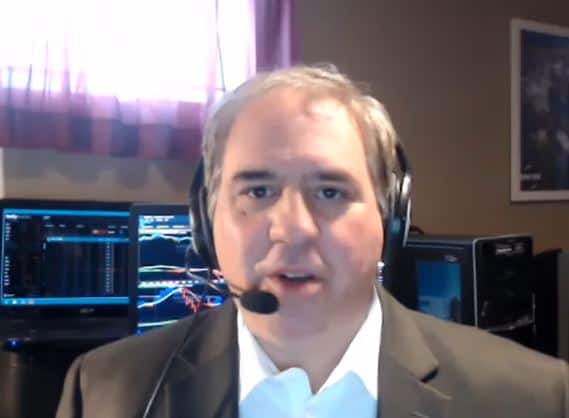
Michael Toma sits down for a live interview to unpack how a career risk manager became a professional trader who runs multiple accounts—personal, friends-and-family, and investor capital—while protecting lifestyle and sanity. The conversation centers on the realities of trading other people’s money: building trust, presenting solutions (not just returns), and translating risk management into portfolio-wide decisions investors actually care about.



In this piece, you’ll learn Michael Toma’s risk-first strategy for attracting and keeping capital: what goes into a credible track record, how to frame edge in investor language, fee and drawdown expectations, tech + execution workflows for mirroring trades, and the regulatory/tax paths to explore with professionals. You’ll leave with a beginner-friendly blueprint for scaling from one account to many—without abandoning your process or your freedom.


















Michael Toma Playbook & Strategy: How He Actually Trades
Risk Framework First
Before chasing setups, Michael Toma thinks like a risk manager. This section lays out how he caps downside first so he can survive long enough for the edge to show up. Use these rules to define your max pain and keep every trade inside a hard envelope.
- Define account-level max drawdown at 8–12%; if reached, trading pauses for a full review week.
- Per-trade risk: 0.25–0.75% of equity, depending on volatility; never exceed 1% on any single idea.
- Cap daily loss at 1.5× average daily win; hit it and stop trading for the day.
- Pre-declare weekly VAR (value at risk): total open risk across all positions ≤ 3% of equity.
- If a trade gaps through the stop, immediately cut to restore the original VAR; no “hope & hold.”
Market Selection & Timeframes
Michael focuses on instruments where execution is clean and spreads are tight. This part clarifies how he chooses what to trade and the time horizons he uses, so you avoid noise and slippage.
- Trade liquid majors/indices (e.g., S&P/Nasdaq futures, EURUSD/GBPUSD, large-cap equities/options).
- Require top-quartile liquidity: bid-ask spread ≤ 0.02% of price or options spread ≤ $0.10 for most contracts.
- Timeframes: H4/D1 for context, M15–H1 for execution; avoid M1 unless news-driven scalp.
- Skip symbols during earnings, major central-bank decisions, or low-liquidity sessions.
- If ATR(14) expands > 1.5× 30-day median, reduce position size by 25–50%.
Edge Definition: Trend + Structure + Confirmation
He doesn’t predict; he stacks objective conditions. Here’s how to define an entry edge that repeats instead of guessing tops/bottoms.

- Trade with the higher-timeframe bias: price above 200-EMA and 50-EMA rising = long-only; mirror for shorts.
- Wait for structure: pullback to 20–50 EMA zone or prior swing; avoid entries in the middle of ranges.
- Require confirmation: break of micro-structure (M15 HH/HL for longs or LH/LL for shorts) plus volume uptick.
- No trade if the reward: risk < 2:1 to the next HTF level; pass on “maybe” setups.
- First hour after a session open: allow one probe only; if it fails, stand down till volatility normalizes.
Entry Triggers & Execution
Entries are mechanical to reduce hesitation and slippage. Follow these rules to get in clean and keep emotion out.
- Use stop orders just beyond the trigger candle high/low; avoid market orders except during fast breaks.
- Place initial stop beyond invalidation (last swing or ATR-based: 1.2× ATR on execution timeframe).
- If price tags your level but closes back inside the structure, cancel and wait for a fresh trigger.
- Do not chase; if price moves > 0.4× initial risk away before fill, skip the trade.
- For options, pick 30–45 DTE with delta ~0.35–0.45 for directional, or spreads with defined risk when IV is high.
Position Sizing & Scaling
Michael sizes for staying power, not ego. This section gives you the math to keep risk consistent and scale when the market proves you right.
- Position size = Account × %Risk / Stop Distance; round down to nearest lot/contract.
- No martingale. Add only on momentum continuation: after +1R in unrealized P&L and a fresh micro pullback.
- Limit total adds to 2; each add is sized at 50% of the initial risk unit.
- Trail from -1R to -0.5R after first add; move to breakeven after partial profit at +1R.
- Hard cap: total risk on a single symbol ≤ 1.5× your standard per-trade risk.
Profit Taking & Trade Management
He harvests risk premiums methodically. Use these take-profit and trailing rules to avoid giving back open gains.
- Scale out 30–40% at +1R, 30–40% at the next HTF level, let the rest trail.
- Use a structure trail: stop follows swing lows/highs or a 3× ATR(14) chandelier on execution timeframe.
- If price speed (range per bar) doubles vs. entry conditions, tighten trail to 2× ATR.
- On news spikes in your favor, bank 50% and revert to normal trailing.
- If invalidation prints (opposite break in HTF structure), exit remainder immediately.
Portfolio Construction Across Multiple Accounts
Michael runs personal and external capital with mirrored intent. These rules help you keep everything aligned while honoring different constraints.
- Maintain a Model Book of active strategies; each account subscribes to the same signals with risk scaled by account rules.
- For conservative accounts, trade defined-risk structures (spreads) or smaller futures micros; for aggressive accounts, use full-size.
- Never exceed strategy risk budget: e.g., Trend-Pullback 50% of VAR, Breakout 30%, Mean-Revert 20%.
- Correlation guard: total exposure to highly correlated indices/FX pairs ≤ 2.5% open risk.
- If one account hits the weekly loss limit, pause that account only—do not punish the others.
Drawdown & Recovery Protocol
Comebacks are pre-planned, not improvised. Here’s how Michael throttles risk down and rebuilds size responsibly.
- At -4%, cut per-trade risk by 30%; at -8%, cut by 50% and trade one setup only.
- Require three consecutive green days before restoring original size; log what changed.
- Ban all new strategies during recovery; only A-setups from the Model Book allowed.
- If the monthly drawdown > 6%, book a strategy review day with no trading.
- After recovery to equity high, keep risk -10% below peak size for two weeks to confirm stability.
Playbook of Core Setups
Michael keeps a short list of repeatable patterns. Use this mini-playbook to focus on what actually pays.
- HTF Pullback Continuation: HTF uptrend, pullback to 20–50 EMA, M15 break of structure; SL beyond swing; TP at prior HTF high.
- Opening Drive Reversal Fade: Parabolic first-hour push into daily level with exhaustion wicks; fade with tight stop; partial at VWAP.
- Breakout + Retest: Consolidation against HTF level; break, retest, go; invalidation = close back inside range.
- IV Crush Swing (Options): Elevated IV pre-event; deploy defined-risk credit spreads; exit on IV normalization or 50% max profit.
Record-Keeping, Metrics & Review
What gets measured gets improved. These are the numbers Michael tracks to decide what to scale and what to cut.
- Journal entry reason, structure, HTF bias, R multiple, MAE/MFE, slippage, news context.
- Track win rate, average R, expectancy, and time-in-trade by setup.
- Cut or refactor any setup with expectancy < 0.2R over 30 trades.
- Maintain a heat map of performance by day/time and symbol; do more where you actually win.
- Rebuild the Model Book monthly; only top-quartile setups keep allocation.
Communications & Capital Stewardship
Trading other people’s money adds duties beyond entries and exits. These rules keep expectations clean and relationships intact.
- Publish a one-page strategy brief: objectives, edge logic, risk limits, expected drawdowns, and fees.
- Send weekly snapshots: equity curve, open risk, top positions, notes on market regime.
- Use plain language for risk: “We risk 0.5% per idea; the worst typical month is -4%.”
- Never promise returns; promise process: how risk is capped and how decisions are made.
- If the strategy breaches a risk rule, notify investors within 24 hours with the corrective action.
Tech Stack & Execution Hygiene
Clean execution prevents avoidable losses. Implement these habits so your process runs smoothly every day.
- Pre-session checklist: platform connection, margin checks, data feed status, and hard stops active.
- Use OCO orders for bracketed exits; avoid manual stop placement during fast markets.
- Maintain redundant internet and a backup broker login; practice flattening all with one command.
- Automate risk throttles (daily loss stop, max position count) at the account level.
- End-of-day: reconcile fills, export logs, tag screenshots, and queue a next-day plan in 10 minutes or less.
Mindset & Routine
Consistency beats intensity. These daily rules keep Michael executing the plan without drama.
- Define one goal per session (e.g., “trade A-setups only”); judge the day by adherence, not P&L.
- Use if-then scripts: “If price is trendless by 11:00, then I stop trading.”
- Protect sleep and exercise; skip the open if HRV or sleep score is poor.
- After any tilt signal (revenge click, FOMO), stand down for 30 minutes and reset.
- Celebrate process wins (perfectly followed plan) with the same intensity as big P&L days.
Risk First: Size Positions To Survive Every Regime
Michael Toma treats risk as the product, not the by-product. He starts by fixing a hard ceiling on account drawdown, then backs into per-trade risk so no single idea can threaten survival. That means sizing every position off stop distance, not “feel,” and letting volatility dictate how big you’re allowed to be. If the market speeds up, size ratchets down automatically; if it calms, you can responsibly scale back up.
He also forces risk limits across time and symbols so correlation can’t blindside him. Daily loss stops end a session before emotion takes the wheel, while a weekly value-at-risk cap keeps total open risk contained. When a trade gaps through the stop, Michael Toma cuts immediately to restore the original risk budget instead of hoping for a bounce. This discipline lets the edge play out over hundreds of trades, because the number one edge is staying in the game.
Volatility-Based Allocation That Expands And Contracts Automatically
Michael Toma treats volatility like a dimmer switch for risk, not a reason to guess direction. When realized volatility or ATR expands, he shrinks position size and reduces the number of simultaneous trades so the total account risk stays constant. When volatility contracts and ranges tighten, he allows size to step back up—but only after confirming that slippage and spreads have normalized. The goal is smooth exposure through choppy conditions, not hero trades during fireworks.
He also aligns holding period with the regime: high vol means quicker targets and faster trails, low vol means wider stops and more patience. For options, Michael Toma tilts toward defined-risk spreads when IV is elevated and favors directional singles when IV is fair and trends are clean. He recalibrates allocation weekly using objective measures—ATR relative to its 30-day median, average true range as a percent of price, and correlation across symbols—so changes aren’t emotional. By automating these adjustments, he ensures his edge scales safely when the market is friendly and pulls back when it’s not.
Diversify By Underlying, Strategy, And Duration To Smooth P&L
Michael Toma spreads risk across uncorrelated engines so one bad patch doesn’t sink the month. He mixes indices, selective FX majors, and a few liquid single names, so no single macro headline dominates his book. Each instrument gets assigned to a specific play—trend-pullback, breakout-retest, or mean-revert—so overlap is intentional, not accidental. The result is a portfolio where different edges take turns paying, instead of everything winning or losing at once.
He also staggers holding periods to blunt timing risk. Shorter tactical trades handle regime shifts and news volatility, while swing positions target the broader move and aren’t forced to exit on every wiggle. When options are in play, Michael Toma blends defined-risk spreads for income stability with directional singles for convex upside, matching duration to the volatility backdrop. By diversifying what he trades, how he trades it, and how long he holds, he engineers a smoother equity curve without relying on prediction.
Mechanics Over Prediction: Rules That Trigger, Validate, And Exit
Michael Toma doesn’t try to outguess the next headline; he lets rules do the heavy lifting. He defines a higher-timeframe bias first, then waits for a repeatable trigger on the execution chart —a break of structure, retest, and a clean candle close. If the trigger fires, he validates it with one or two objective checks like volume thrust or ATR-normalized range expansion; if those aren’t present, he passes. The point is to trade a testable process, not a feeling that’s forgettable.
Once in, Michael Toma manages the trade with the same mechanical discipline. Stops live at technical invalidation—never inside the noise—and targets are placed at pre-mapped levels to lock in at least a 2R multiple. If momentum stalls, he scales partials and trails the rest using structure or ATR so winners don’t turn into passengers. And when a rule is broken—late entry, skipped confirmation, moved stop—he logs it immediately, because the data he collects on mechanics is what keeps the edge sharp and prediction out of the driver’s seat.
Defined Versus Undefined Risk: When To Cap The Tail
Michael Toma separates trades by whether the worst-case is known up front or left to chance. When the tail is nasty—earnings gaps, macro events, thin liquidity—he favors defined-risk structures like debit spreads or tight stop distances sized small, so the maximum loss is pre-agreed with himself. If the environment is stable and trend-friendly, he’s willing to use undefined-risk instruments only when he can cap exposure with hard stops, position limits, and a strict daily loss cut—mechanical brakes, not gut feel.
He also matches structure to objective conditions instead of preferences. High implied volatility? Michael Toma sells premiums using defined-risk spreads to get paid for the uncertainty while capping downside. Low IV with clear trend? He’ll take directional singles or futures, but he enforces a 2R minimum target and moves to breakeven as soon as structure confirms. The rule is simple: cap the tail when the market can take more than you planned; leave it open only when your controls make the true risk smaller than the reward on the table.
In the end, Michael Toma’s edge isn’t a secret indicator—it’s the way he treats risk as the product and everything else as packaging. He sets hard limits first, then sizes trades off stop distance so survival is non-negotiable. Volatility doesn’t scare him; it simply dials exposure up or down so the account risk stays steady even when the market isn’t. That discipline frees him to trade with clarity, because the worst case is always priced in before he clicks.
He also builds a portfolio that doesn’t live or die on one idea. By diversifying across underlying, strategy, and duration, Michael Toma lets different engines pay at different times and avoids the all-on/all-off equity curve that wrecks confidence. Mechanics beat prediction at every step: higher-timeframe bias, objective triggers, clear invalidation, and pre-mapped targets with at least 2R on the table. Once in a trade, management is just as systematic—partials, structure, or ATR trails, and no hesitation in cutting when the thesis breaks.
Most importantly, he respects tails. When the environment can take more than you planned, he uses defined-risk structures and smaller size; when conditions are stable and liquid, he’ll open the throttle—but only within strict daily and weekly risk budgets. Add clean record-keeping, correlation guards, drawdown recovery rules, and straight talk when managing outside capital, and you get a playbook built for longevity. Michael Toma’s lesson is simple and scalable: protect the downside, mechanize the decision points, and let time and sample size reveal the edge.