Table of Contents
In this interview, Waqar sits down with Dan—an underrated UK trader who splits his time between prop-firm funding, investor capital, and a growing property portfolio. You’ll hear how Dan went from tough beginnings to multi-stream entrepreneurship, why moving the family to Dubai is part of the plan, and how fatherhood sharpened his focus on discipline and legacy. He’s candid about the real driver of profitability: commitment, clean process, and the self-control to follow it when it counts.



Reading this, you’ll learn Dan’s simple three-step framework—proof of concept, relentless journaling, and unwavering confidence—and how to turn it into daily execution. We cover his sentence-length strategy, top-down bias on indices like DAX and NASDAQ, when he presses risk (and when he doesn’t), and why prop-firm “reset button” habits can poison real-money decisions. Expect practical takeaways you can use today: write your checklist, measure everything, and trade like there’s no restart—because there isn’t.


















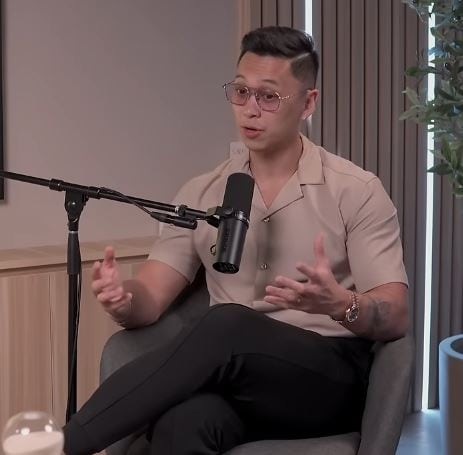
Dan Cheung Playbook & Strategy: How He Actually Trades
Core Operating Framework
This is the backbone Dan uses to keep his trading simple, consistent, and scalable. It’s the workflow that turns ideas into measured execution and stops you from tinkering yourself into chaos.
- 30-Day Proof Phase: Trade minimum size for 30 market days; proceed only if weekly expectancy is positive and max drawdown stays under 5%.
- One-Change Rule: Test just one variable per week (entry filter, stop style, time window). If expectancy drops over five trades, revert.
- Tagged Journaling: Log every trade at close with setup tag, market bias, risk, execution grade (A/B/C), and an emotion keyword.
- Weekly Scorecard: Every Friday, compute win rate, avg R, payoff ratio, time-in-trade, and slippage; set one objective for next week.
Market Universe & Sessions
Dan keeps a tight universe to cut noise and build repetition. He treats sessions like “different markets,” because behavior changes when liquidity shifts.
- 2–3 Instruments Max: Primary focus on one index future (e.g., NASDAQ or DAX), one backup index, and optionally one FX pair.
- Session Specialization: Pick one main session (London or New York) and a 90-minute execution window; no trades outside it.
- No “New Toy” Drift: New product requires 50 paper trades with tracked expectancy before risking real capital.
- News Windows: Flat 5 minutes before high-impact releases on your instrument; re-engage only after structure re-forms.
Building Bias (Top-Down to Trade Plan)
Bias drives selection and risk; it doesn’t force entries. Dan builds a simple top-down story, then waits for price to validate it locally.

- Daily Map: Mark prior day’s high/low, session high/low, weekly open, and nearest HTF supply/demand or fair-value zone.
- One Sentence Bias: Write a single sentence: “I’m a buyer above X while Y holds; invalid below Z.”
- If/Then Triggers: “If pullback to prior session VWAP with delta flip, then look long; invalid if 5-min close below VWAP.”
- No Bias? No Trade: If daily structure is unclear, risk is halved and only A-setups are allowed.
A-Setup Criteria (What Must Be True)
A-setups are rare on purpose. Dan defines them tightly so there’s no debate when it’s time to click—or time to pass.
- Location: Entry occurs at one of three pre-marked levels only (HTF zone, prior session level, or VWAP/POC cluster).
- Context: Higher-timeframe trend intact or clear range extremes; avoid mid-range chop.
- Confirmation: One of: absorption at level, trapped breakout with swift reclaim, or impulse-pullback-continuation on 1–5m.
- Timing: Within your 90-minute window; first 30–60 minutes preferred for indices due to liquidity and range expansion.
Entries & Triggers
Dan enters where invalidation is obvious and cheap. He’d rather miss a move than buy the middle and invent a stop later.
- Hard Stop Placement: Stops go just beyond the structure you’re trading (behind the wick/zone that proves you wrong).
- Limit vs Market: Use limit at level for mean-reversion tags; use market on momentum breaks with immediate HOD/LOD pressure.
- No Mid-Candle FOMO: If price leaves without you, let it go; only chase on a scripted continuation with fresh invalidation.
- Two Tries Max: If the first attempt scratches and conditions persist, allow one re-entry; after two attempts, stand down.
Risk & Sizing
Sizing is math, not mood. Dan keeps risk constant per idea so results reflect edge quality, not random bet size swings.
- Static R: Risk a fixed % per trade (e.g., 0.25–0.5%); never scale risk because you “feel it.”
- ATR-Aligned Stops: Minimum stop distance ties to current ATR fraction; if structure demands wider stop, reduce size to maintain R.
- Press Only on A-Setups: Double size allowed only when all A-criteria align and weekly drawdown <2R.
- Daily Loss Guard: Hard stop at -2R/day; hit it and you’re done—no “one last trade.”
Trade Management
How you manage is your edge in practice. Dan cuts losers fast, lets winners work, and avoids tinkering during the muck.
- First Scale at +1R: Take 30–50% at +1R when context is range-bound; in trend conditions, defer scale to +1.5–2R.
- Stop to Breakeven (Conditional): Move to BE only after structure confirms (higher low/ lower high after entry) or first target hit.
- Trail with Structure: Trail under swing lows (long) or above swing highs (short) on your execution timeframe.
- Time Stop: If trade hasn’t progressed by one full session rotation or loses structural context, exit flat/scratch.
Playbook Setups (Templates You Can Copy)
Dan keeps three core plays. Each has clear conditions so you can replicate without guesswork.
- Reclaim at Prior Session Level: Bias aligned; price sweeps last session high/low, reclaims; enter on first pullback to the level; stop beyond sweep; target opposite session level or measured move.
- VWAP Reversion Fade: Trendless day; extension >1.5× standard deviation from VWAP; look for exhaustion/absorption; fade back to VWAP; partial at VWAP, leave runner to opposing deviation band.
- Impulse-Pullback-Go (IPG): Strong opening drive with volume; wait for shallow pullback holding 50–61.8% of impulse; enter on continuation candle or delta flip; trail under pullback low.
Data, Stats & Review
What gets measured improves. Dan’s review turns intuition into numbers so decisions are less personal and more repeatable.
- Setup Buckets: Track performance separately for Reclaim, VWAP Fade, and IPG; drop or rewrite any setup <1.2 payoff over 40 samples.
- Context Tags: Add tags like “trend day,” “range day,” “news day,” and “low vol” to see which environments pay.
- Latency & Slippage: Record order type, fill distance, and slippage; prefer limit at levels if slippage >0.2R on average.
- Monthly Debrief: Prune one rule, strengthen one rule, and add one drill for next month based on stats.
Prop-Firm vs Live Capital (Behavior Rules)
Dan treats prop accounts like live ones to prevent bad habits. If it wouldn’t pass your personal risk policy, it doesn’t pass here.
- No Reset Mindset: Weekly drawdown cap mirrors live rules; if breached, step back for a full trading day and re-plan.
- Consistent R: Same per-trade risk on prop and live; no “challenge mode” aggression.
- Payout Windows: Flatten risk 24 hours before payout dates; protect compounding rather than force extra trades.
- Audit Trail: Export dashboards and journals after each payout cycle; keep the same metrics for live accounts.
Psychology & Execution Hygiene
Discipline is engineered, not wished for. Dan designs the day so the right behavior is the default and bad behavior is blocked.
- Pre-Market Checklist (5 Minutes): Bias sentence, key levels, news times, A-setup conditions, abort conditions.
- Single-Task Execution: Platform on one screen, journal on the other; social/Discord/YouTube closed during the 90-minute window.
- Post-Trade Breath: 60-second pause after exits to log and reset; no immediate revenge entries.
- Environment Locks: If you violate a rule (e.g., third trade after -2R day), trading session ends—no exceptions.
Daily Routine (Open to Close)
Routines reduce decision fatigue. Dan’s schedule ensures he’s primed when it matters and invisible when it doesn’t.
- Pre-Open (30–45 min): Mark levels, write bias, set alerts at locations—not at prices you wish existed.
- Execution Window (90 min): Take only A or high-B setups; pass on everything else; hard stop at session end.
- Midday Off-Switch: No trades during lunch drift; review morning stats and screenshots instead.
- Close Review (15 min): Journal, tag mistakes, export screenshots, set one improvement for tomorrow.
Size Risk by Volatility, Not Confidence in Your Idea
Dan Cheung drills this into every trade: position size comes from market volatility, not from how “right” you feel. If the instrument’s range is exploding, your unit size should shrink; if it’s calm, it can expand—same risk, different size. Use a consistent yardstick like ATR or session standard deviation so the math is objective, not emotional. Your stop lives where the thesis is invalidated; the distance to that stop determines how many contracts or lots you can carry. This keeps the R you risk per trade stable even as conditions change.
In practice, Dan Cheung translates volatility into size with a simple loop: define fixed risk per trade (e.g., 0.25–0.5% of equity), measure current ATR, place the stop just beyond the structure, and compute quantity so loss at stop ≈ fixed R. If volatility jumps, the same stop distance now costs more—so size ratchets down automatically, avoiding outsized losses. No adding to losers, no “confidence bumps,” and no ignoring regime shifts; if vol doubles, he halves size or sits out. Daily loss is hard-capped (e.g., -2R), so even in chaotic tape, damage stays contained while the edge survives.
Diversify by Market, Strategy, and Trade Duration Separately
Dan Cheung treats diversification as three distinct dials—what you trade, how you trade it, and how long you hold. He avoids stacking correlated bets by running, for example, an index mean-reversion alongside a trend-continuation in FX, rather than two similar index plays. If two ideas make money for the same reason, he counts them as one risk and sizes the total accordingly. He also separates “session trades” from “swing holds,” so a choppy intraday doesn’t bleed into an otherwise healthy multi-day view.
In practice, Dan Cheung maps exposure like a matrix: instrument columns (indices, FX, commodities), strategy rows (reversion, momentum, breakout), and duration buckets (scalp, intraday, swing). He limits any single cell to a fixed share of risk and caps total exposure per column to prevent “all indices, different names” syndrome. When correlations spike, he cuts the number of concurrent positions first, not his discipline—fewer, higher-quality bets across different cells. The result is smoother equity: wins come from different engines, and drawdowns don’t all arrive from the same mistake.
Trade the Mechanics: Levels, Triggers, Execution—Not Predictions
Dan Cheung doesn’t forecast; he prepares. He pre-marks levels before the session—prior day high/low, session VWAP, and the nearest HTF zone—and writes a one-sentence bias that includes an invalidation. Then he trades only if an if/then trigger fires at a level (e.g., “If price reclaims prior low and holds one 5-minute close, then long”). This turns trading into a repeatable checklist: location first, trigger second, execution third.
During execution, Dan Cheung keeps the mechanics tight: limit orders at mean-reversion levels, market orders on momentum continuation, and hard stops just beyond the structure that proves him wrong. He measures slippage and time-in-trade so he can refine entries instead of rewriting the whole system. Each trade gets an execution grade (A/B/C) based on adherence to rules, not outcome, which kills hindsight bias. By outsourcing decisions to prewritten mechanics, he reduces stress, avoids mid-candle improvisation, and lets the stats—not opinions—drive improvements.
Favor Defined Risk; Avoid Martingales and Open-Ended Loss Paths
Dan Cheung treats undefined risk as a career risk, not just a trade risk. Every idea starts with a fixed R, a hard stop beyond clear invalidation, and zero tolerance for averaging down. If the setup is good, it doesn’t need a bigger hole to climb out of—so no martingale, no grid add-ons into weakness, and no “it’ll come back” hopium. He sizes the position to survive the stop, not to survive his ego, which keeps losses small and stats honest.
When conditions change, Dan Cheung adjusts with structure, not hope: trail behind swing points, reduce on failed follow-through, and exit entirely on rule-based invalidation. Hedging is planned, not improvised; if a hedge can’t be defined in advance with its own stop and target, it’s not a hedge—it’s drift. He caps intraday loss at -2R and weekly drawdown at a pre-set threshold, ensuring no single day or week can derail the month. This creates a simple promise to himself: every trade can hurt, none can kill.
One Change Per Week: Measure Expectancy and Enforce Discipline
Dan Cheung keeps improvement boring on purpose: one tweak at a time, measured against hard numbers. He sets a weekly experiment—like changing entry filter, stop style, or timing window—and judges it by expectancy, payoff ratio, and drawdown, not vibes. By isolating variables, he knows what actually moved the needle and avoids the common trap of overhauling a whole system after a few trades.
In practice, Dan Cheung logs every trade with setup tags and runs a Friday review to compare the “new rule” cohort versus baseline. If expectancy or risk-adjusted return slips, the change is binned; if it improves over a minimum sample, it stays. No stacking tweaks, no midweek meddling, and no exceptions because a trade “felt special.” This slow, statistical cadence protects edge, preserves confidence, and turns progress into a habit instead of a hope.
Across the full interview, Dan Cheung hammers one message: consistency beats bravado. He builds a simple engine—define risk in R, place the stop where the thesis dies, size by current volatility—and then refuses to deviate when the tape gets loud. The prop-firm angle isn’t a shortcut; it’s a pressure test. He treats prop like live capital, with the same drawdown limits, the same daily stop, and zero “reset button” thinking. That mindset—trade like there’s no restart—forces clean entries, fast cuts, and emotionally boring management.
Process is the second pillar. Dan Cheung pre-writes a one-sentence bias, marks the same core levels every day, and only acts when an if/then trigger fires at a location. After the trade, he journals instantly, tags the setup, and grades his execution—win or lose—so the stats can judge the idea, not his feelings. Improvement is methodical: one change per week, measured by expectancy and drawdown, or it gets binned. The compounding benefit is huge: fewer variables, clearer feedback, and steady confidence.
Finally, he spreads risk smartly instead of widely. Diversification means different engines—market, strategy, and duration—not five correlated versions of the same bet. He concentrates into A-setups during a tight session window, sits out when context is muddy, and protects the month with hard equity stops. Put it together and the lesson from Dan Cheung is straightforward: define risk, script mechanics, journal the truth, and let the numbers—not hope—decide what stays in the playbook.