Table of Contents
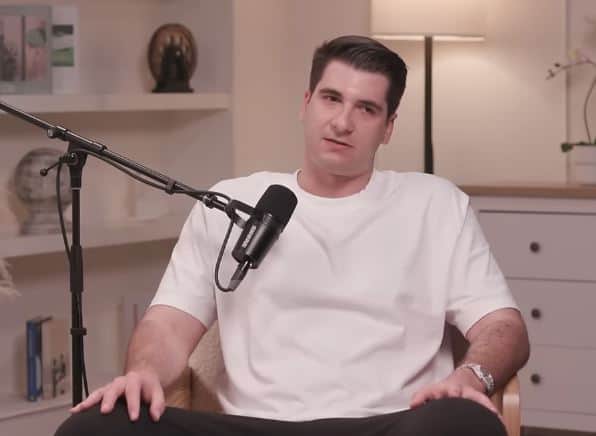
This interview dives into Andrew—the self-described “just a trader” who became the most banned prop-firm trader while managing $6.7M in funding—and why his story matters to anyone chasing consistency. You’ll hear how he navigates prop evaluations, handles payouts across many firms, and keeps his process simple: higher-timeframe bias, liquidity targets, and strict timing (mostly around the New York session). It’s a rare, candid look at funded trading that cuts through labels and focuses on what actually pays.



In this piece you’ll learn Andrew’s practical trader strategy for scaling: target just 1–2% a month on funded accounts, use wider stops to avoid death-by-stop-outs, split orders to reduce slippage, and concentrate entries when the market is actually likely to move. You’ll also take away his capital-first mindset for prop firms (stack evaluations, copy to many accounts, then trade conservatively), plus the psychology that underpins it—low expectations, discipline, and treating trading as a repeatable process rather than an identity.


















Andrew NFX Playbook & Strategy: How He Actually Trades
Core Framework: Bias → Liquidity → Timing
Here’s the backbone of Andrew’s decision-making. He builds a higher-timeframe bias first, then stalks obvious liquidity pools, and only executes when his preferred session is likely to deliver range expansion. This keeps him out of chop and focuses risk where the market actually moves.
- Define weekly/daily bias from structure and key levels; only take trades in the direction of that bias.
- Mark resting liquidity (equal highs/lows, session highs/lows, prior day’s extremes) and plan to trade into or away from it.
- Limit executions to the NY session window when volatility is reliable; if the day’s ATR is already spent, stand down.
- If bias is unclear on D1/H4, skip the day—no “neutral” trades.
Setup Selection: Simple Triggers, Same Places
He doesn’t chase exotic patterns. He repeats a small set of triggers at the same locations: HTF levels, session ranges, and obvious liquidity. Consistency in where and how he enters makes outcomes measurable.
- Longs: After a sweep of a prior low/Asian low into HTF demand, wait for a 5–15m displacement up and buy the first clean pullback.
- Shorts: After a sweep of a prior high/Asian high into HTF supply, wait for a 5–15m displacement down and sell the first clean pullback.
- Require a fresh displacement candle that closes beyond a micro-range; no wick-only “breaks.”
- If the first pullback is sloppy (overlaps >50% of the impulse), pass and wait for the next clean one.
Risk & Money Management: Wide Stops, Small Risk, Bigger Life
Prop rules and real volatility mean tight stops get clipped. Andrew sizes down, places stops beyond the nonsense, and lets the trade breathe. The aim is steady monthly compounding without rule breaches.

- Risk per trade: 0.25–0.50% on a single account; never exceed 1% combined if stacking entries.
- Daily loss cap: 1% hard stop; hit it and you’re done for the day.
- Place stops beyond the swept liquidity or structure (typically 1.2–1.5× the recent swing), not “just below”/“just above.”
- If spread/volatility spikes, halve size rather than tighten the stop.
Scaling & Partial Management: Pay Yourself, Then Hunt the Runner
He banks early to remove pressure, then lets a smaller remainder aim for range expansion. This balances win-rate with RR without needing hero calls.
- First partial at +1R or the opposing session level (e.g., prior day’s mid/ADR boundary).
- Move stop to breakeven only after first partial is secured or structure shifts in your favor.
- Trail remainder behind new 15m structure or session VWAP reclaim; no fixed pip trails.
- If price returns to entry after partials, exit the balance—don’t re-risk the booked win.
Multi-Account Prop Tactics: Conservative Edges, Aggressive Distribution
The edge is modest, but he multiplies it across accounts while protecting each account’s health. The goal is to keep accounts alive long enough to harvest frequent payouts.
- Mirror the same trade across accounts with proportional risk; never exceed firm-specific daily and max loss buffers.
- Stagger lot sizes by account equity/rules; avoid identical timestamps to reduce slippage on thin moves.
- Withdraw regularly (e.g., biweekly) and reset risk to baseline after each payout.
- Avoid trading minutes before high-impact news on evaluation accounts; pass or reduce to token size.
Instrument Focus & Session Model: EURUSD First, Keep It Familiar
He specializes. Less watchlist equals more repetitions and pattern memory. NY session gives reliable movement and cleaner risk accounting.
- Primary pair: EURUSD; add GBPUSD or XAUUSD only when HTF alignment is crystal clear.
- Trade the NY kill-zone (roughly 8:30–11:30 NY time); avoid late-day revenge trades.
- If Asia sets a tight range, look for NY expansion; if Asia already expanded, expect mean reversion first.
- Respect ADR: if 80–100% of ADR is already done before your entry, reduce size or stand aside.
News & Volatility Rules: Don’t Be a Hero
Big releases can gift setups—but they can also nuke evaluations. Andrew treats them with strict guardrails so edge > luck.
- 15 minutes before red-flag data: flatten or cut to minimal test size.
- 5 minutes after: allow one setup only if displacement leaves a clean structure with defined risk.
- For FOMC/NFP/CPI: trade post-release retests only; never the first spike.
Execution Hygiene: Fewer Clicks, Better Data
Process beats prediction. He keeps execution mechanical so journaling reveals what truly works—and what doesn’t.
- Pre-plan each trade with entry, stop, targets, and invalidation; write it down before clicking.
- Max 2 trades per day; if the first is full-loss and plan quality was high, one more attempt only.
- Screenshot before/after with annotations; tag by setup type (sweep-to-displacement, session high/low break, etc.).
- Weekly review: cut the worst-performing tag and double down on the best.
Psychology & Expectations: Small Monthly, Big Annual
The monthly target is deliberately low to avoid forcing trades. Over a year, small monthly compounding—spread across accounts—adds up.
- Target 1–2% per month per account; anything above is a bonus, not a goal.
- Zero-trade days are a win if the bias wasn’t clear or ADR was spent.
- After a payout, reset expectations and revert to baseline risk immediately.
- Speak in probabilities: “If X, then I do Y.” Eliminate “I think” from trade notes.
Practical Checklist (Pre-Trade → Post-Trade)
This is the quick, repeatable loop Andrew runs every session. Keep it visible on your desk and in your journal.
- Pre-market: mark D1/H4 bias, Asia high/low, prior day’s high/low, and obvious equal highs/lows.
- Plan A/Plan B: write entry, stop distance, first partial, runner target; confirm risk < daily cap.
- Execution: enter only on displacement + first clean pullback in bias direction.
- Management: take partial at +1R/structure; move stop only after partial or structure shift.
- Post-trade: annotate chart, tag setup, record RR/result, and state one improvement for tomorrow.
Size Risk First: Fixed Fraction, Not Feelings, Across All Trades
Andrew makes risk sizing the first decision, not an afterthought. Before he even looks for entries, he locks a fixed fraction of equity per idea—small enough to survive variance, repeatable enough to scale. By committing to a predefined percentage, he removes the emotional wiggle room that leads to oversized losers and inconsistent results.
He also ties that fixed fraction to clear daily and weekly loss limits, so one impulsive click can’t wreck the account. Andrew’s rule of thumb is simple: protect longevity first, profits second; the edge only shows up if you’re still around to take the next trade. Once the risk is fixed, every other choice—entry precision, partials, and exits—serves the same mission: keep downside capped while letting winners breathe.
Let Volatility Dictate Position Size, Stops, And Profit Targets
Andrew builds every trade around current volatility instead of fixed pip notions. If ranges are expanding, he automatically reduces size and widens the stop; if ranges are compressed, he tightens risk and accepts smaller expected payoff. This keeps his expectancy stable when markets speed up or slow down. He measures average true range and session behavior first, then calibrates entries to that backdrop.
Profit targets get the same treatment—Andrew aims for multiples that reflect the day’s achievable travel, not a fantasy RR. When volatility dries up after a big move, he scales down ambition and takes profits sooner; when the tape is thumping, he lets runners breathe into range extension. Stops are placed beyond the noise band, not at round numbers where everyone else sits. By letting volatility set the boundaries, Andrew avoids death-by-chop in quiet markets and blowups in wild ones.
Diversify By Instrument, Strategy, And Timeframe To Smooth Equity
Andrew spreads risk across a few familiar instruments and a couple of distinct playbooks so no single market or setup controls his month. He’ll keep EURUSD as home base, then rotate a secondary pair or metal only when his higher-timeframe read is clean. Each playbook has different drivers—trend-continuation versus sweep-and-reversal—so when one cools off, the other can still produce. This mix cuts correlation between trades and softens drawdowns that come from over-concentrating on one “favorite” idea.
He also staggers holding periods—scalps into session targets and swing runners into weekly levels—so returns don’t depend on a single tempo. Andrew journals results by instrument, setup tag, and duration, then reweights toward whatever is actually working in the current regime. If two buckets start moving together, he temporarily caps exposure to both to avoid hidden correlation. The goal isn’t more trades; it’s a portfolio of small, independent edges that add up without spiking risk.
Trade Mechanics Over Predictions: Triggers, Checklists, And Repeatable Execution
Andrew treats forecasts as noise and mechanics as the edge. Before the session, he runs a tight checklist: bias, levels, news windows, and the one trigger he’ll allow himself to click. An entry is valid only when the market prints his trigger (displacement and first pullback) at a pre-marked level with risk already calculated.
Once in, Andrew follows a scripted path: partial at the first structure target, stop to breakeven only after banking, and a rules-based trail that moves with new 15-minute structure. If the trade deviates from plan—late entry, stretched stop, sloppy pullback—he closes it without debate and logs the mistake. Every execution is tagged by setup type and session so he can cut what’s underperforming and double down on what’s paying. The prediction might be wrong, but the process is never optional; Andrew lets the checklist make the decision and the journal keep him honest.
Choose Defined Risk Setups; Avoid Unlimited Tail Exposure And Overleverage
Andrew keeps a hard line between trades with capped downside and those that can spiral. If he can’t define the max loss in advance—clean invalidation level, stop distance, and slippage assumptions—he passes without hesitation. He refuses martingale adds, grid averaging, or “saving” losers; risk is front-loaded, not negotiated mid-trade. Options or leveraged products are used only when the payoff is asymmetrical and the worst-case is crystal clear.
When volatility spikes, Andrew scales notional down instead of widening exposure and “hoping” the move calms. He caps concurrent risk across correlated instruments so one shock can’t hit every position at once. After booking a payout, he resets size to baseline to avoid creeping leverage and the illusion of invincibility. Andrew’s mantra is simple: if the downside isn’t precisely known at entry, it’s not a setup—it’s a liability.
In the end, Andrew’s edge isn’t a magic indicator—it’s ruthless clarity about risk, volatility, and timing. He sizes first, trades second, and never lets a “good idea” outrun a bad stop. By anchoring every decision to the higher-timeframe bias and obvious liquidity pools, he avoids the death-by-chop that swallows most funded accounts. New York session is his stage, and if the tape won’t likely expand there, he simply doesn’t perform. The takeaway is brutally practical: define risk precisely, let volatility set your boundaries, and show up only when the market is statistically generous.
Andrew also treats prop trading like a business: conservative risk on each account, aggressive distribution across multiple accounts, and frequent withdrawals to keep realized gains real. He manages trades with simple mechanics—displacement, first clean pullback, partials at structure—so the journal can prove what works and expose what doesn’t. Diversification isn’t about chasing more charts; it’s about mixing a few independent edges across instrument, setup, and holding period so no single idea dictates the month. Most importantly, Andrew refuses undefined risk—no martingale, no grid “saves,” no hero trades into news spikes. If there’s a parting lesson from Andrew, it’s this: protect longevity first, because only a trader who’s still in the game can compound.

Related posts:
- Inside the Trader Mindset: The Prop Firm Strategy Behind a $2.5M Payout
- Trader Strategy Playbook: Inside a Prop Firm CEO’s Mind
- From Producer to Prop Firm Payouts: A Trader Strategy That Actually Sticks
- Night-Owl Trader Strategy: Rahat’s Prop Firm Playbook
- Prop-Firm Reality Check: A Trader Strategy That Actually Survives
- Prop-Firm Trader Strategy: Kyle’s Playbook with Raja Banks
- Prop-Firm Trader Strategy: Pasquale’s Playbook for Turning Fundamentals into Payouts
- Inside the Trader Education Strategy That Scaled to an Exit
- Trader Strategy Playbook: Andrew O’Connell’s Verified Path to Big Years
- Trader Strategy Spotlight: Dr. Andrew Aziz on Discipline, Losses, and Everest
- From Prop to Futures: a Trader Strategy That Survives Rule Changes
- NYC OG Trader Strategy: Omar’s Path from Equities to Forex & Prop Payouts