Table of Contents
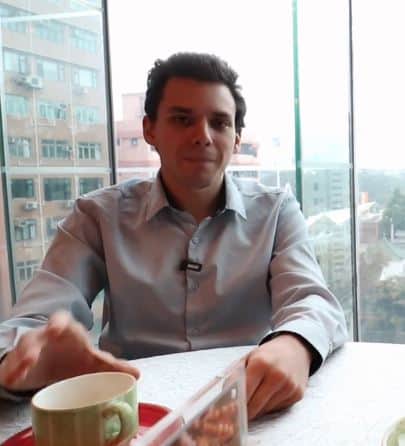
Alejandro Perez sits down for a no-nonsense chat about algorithmic trading—how he went from tinkering with basic builders to coding full systems and managing them like a real portfolio. Filmed in Hong Kong, this interview digs into why Alejandro matters to retail traders: he’s the guy who translates trading ideas into logical steps a robot can actually execute, then pressure-tests those rules in live conditions.



In this piece, you’ll learn how Alejandro structures strategies from first principles (logic before code), the right way to backtest with quality data, and when to throttle or pause algos around news and holiday liquidity. You’ll also see how he sizes risk, promotes or “lays off” underperforming robots, and treats correlated pairs inside a portfolio so your overall drawdown stays sane while your edge compounds.

















Alejandro Perez Playbook & Strategy: How He Actually Trades
Strategy foundations: logic before code
Alejandro Perez builds every system from first principles. He translates an idea into simple, testable rules, then lets automation scale the experiments. The aim is a robot that survives live conditions, not a backtest beauty pageant.
- Write the strategy in plain English first; only then convert to precise entry/exit rules.
- Each rule must be binary and testable (yes/no). Remove any rule you can’t define in a single sentence.
- Start with one market and one timeframe; prove it works before you add variants.
- Favor robust signals (trend, breakouts, mean-reversion bands) over “perfect” indicators.
- Automate parameter sweeps; don’t hand-pick settings—let the data force your choices.
Backtesting that actually predicts live.
Alejandro treats backtesting as a way to learn, not to confirm bias. He stresses enough sample size, clean splits, and avoiding leakages that make robots look smarter than they are.
- Require a minimum of 100 trades per variant before you trust any metric.
- Use a 70/30 or rolling-window split (in-sample/out-of-sample). Never optimize on the same data you report.
- Penalize complexity: if two settings are close, pick the simpler one.
- Track regime coverage: your test set must include trends, ranges, high- and low-volatility periods.
- Store raw trades and recompute stats yourself to avoid platform quirks.
Data hygiene & execution assumptions
Strategies die when your test environment lies about fills and spreads. Alejandro bakes in realistic frictions so live results don’t feel like a different strategy.

- Add spread, slippage, and commissions that reflect worst-case daytime conditions.
- Enforce bar-by-bar testing (no lookahead). Entries execute on the next bar/next tick only.
- Disallow perfect-limit fills; require price to trade through your limit by at least 1 tick.
- Stress-test with 1.5–2× your normal spread and slippage to check fragility.
- Reject any variant whose edge disappears with slightly worse costs.
When to pause around news and holidays
He backtests with news included, but in live trading, he’s selective: poor liquidity and gap risk can ruin otherwise good robots. Context matters.
- Maintain a calendar of major economic releases for each market you trade.
- Auto-disable entries 15–30 minutes before tier-1 events; re-enable 15–30 minutes after.
- Stand down on thin-liquidity sessions (late Friday, holiday eves, post-holiday opens).
- If you must trade through events, halve size and widen stops/targets by your spread multiplier.
- Log slippage during event windows; demote any robot with chronic event slippage.
Risk sizing that survives drawdowns
Alejandro sizes from portfolio risk down to the robot, then to the trade. He also throttles exposure on riskier symbols instead of treating every pair the same.
- Set a portfolio daily loss limit (e.g., -2R or -2%) that cuts all new entries for the day.
- Default per-trade risk ≤1R (≈1%); reduce to 0.25–0.5R for higher-risk symbols/behaviors.
- Cap symbol exposure: max 1.5–2R total across all robots trading the same instrument.
- Hard cap correlated exposure (e.g., related FX pairs, sector names): max 3R aggregate.
- Use volatility-adjusted position sizing so your stop distance, not your mood, sets quantity.
Portfolio construction & correlation control
A good robot can still wreck a portfolio if it moves with your other robots. Alejandro promotes diversification by logic, timeframe, and market.
- Hold robots that diversify by signal family (trend vs. mean-reversion), timeframe, and market.
- Compute rolling 90-day return correlations between robots; keep average pairwise corr <0.3.
- If a new robot lifts portfolio corr above threshold, scale it down or reject it.
- Limit any single robot to ≤15% of portfolio risk budget.
- Review correlation after regime shifts; correlations spike in stress—plan for it.
The robot lifecycle: promote, throttle, retire
Robots have careers. Alejandro evaluates them on live stats, not vibes. Promotions earn more risk; slumps trigger throttles or the bench.
- Define promotions: +10R net with max drawdown <5R in live → +50% risk multiplier.
- Define throttles: -6R rolling or a new max drawdown breach → halve size for 20 trading days.
- Define retirement: two consecutive throttle periods or edge vanishes in refit → remove from rotation.
- Re-verify with fresh data quarterly; never re-optimize just to match last month.
- Keep a sandbox list: candidates need 100 live trades or 3 months (whichever is later) before promotion.
Human touch where it pays
Some symbols benefit from minimal human inputs (e.g., weekly support/resistance zones), but Alejandro keeps the touch light and rule-based so the robot stays consistent.
- Allow pre-planned weekly levels only (entered once, auto-expire weekly).
- If price is within 0.5× ATR of a key level, switch robot to conservative mode (wider targets, half size).
- No discretionary overrides mid-trade; only pre-defined states your code understands.
- Document every manual input with a timestamp and reason; if it helps, codify it.
Entries, exits, and trade management.
Simplicity beats cleverness. Alejandro favors clear triggers and symmetrical management that’s easy to code and test.
- Use one primary trigger plus one filter max (e.g., breakout + volatility filter).
- Stops placed at structural invalidation (swing/ATR multiple); no “mental” stops.
- If price moves +1R, move stop to breakeven; partials optional, but rules must be fixed.
- Time stops: if trade hasn’t moved +0.5R within N bars, exit at market.
- For mean-reversion, forbid averaging down; add only on new independent signals.
Metrics that matter (and those that don’t)
He tracks a tight set of stats and ignores vanity numbers that don’t survive contact with the market.
- Focus on net R, max drawdown (R), profit factor, Sharpe, and Ulcer Index.
- Track expectancy per trade and edge consistency (monthly net R distribution).
- Record slippage per trade and spread-to-target ratio; kill robots with chronic friction drag.
- Ignore hit-rate without context; a 35% win rate can be elite if the payoff is 2.5–3R.
- Maintain a live vs. backtest delta dashboard; if live underperforms by >20% for 200 trades, investigate.
Daily, weekly, and monthly routines
Consistency is the edge behind the edge. Alejandro keeps a lightweight cadence so the whole fleet stays healthy.
- Daily: check event calendar, system heartbeats, and overnight fills; confirm risk caps are active.
- Weekly: refresh pre-planned levels, rebalance risk multipliers, and recompute rolling correlations.
- Monthly: re-run robustness checks with updated data; graduate/bench robots per lifecycle rules.
- Quarterly: portfolio post-mortem—best/worst robots, friction analysis, regime notes; prune aggressively.
- Always version your robots; only one approved version runs live at any time.
Guardrails & kill-switches
Robots fail gracefully when guardrails are explicit. Alejandro hard-codes fail states, so small problems never become existential.
- Global kill-switch: disable all new entries if connectivity, data feed, or broker errors persist >5 minutes.
- Per-robot kill: disable on 3 platform errors or 2 rejected orders in a session.
- Equity protection: stop trading day when portfolio hits -2R or a robot hits -1.5R.
- Slippage guard: if average slippage > 2× baseline for the day, cut size by half automatically.
- Overnight risk: forbid new positions within 30 minutes of session close unless the strategy is designed for gaps.
Size every trade by volatility; protect equity with hard daily stops
Alejandro Perez keeps position size tied to market noise, not emotion. When volatility expands, he scales down so the same stop distance risks the same fraction of equity; when volatility contracts, he scales up modestly. That way, a single outlier bar can’t blow up the day, and each trade represents a consistent bet size in R terms.
He also sets a hard daily stop at the portfolio level and treats it as non-negotiable. If the line is hit, all new entries are disabled, and the focus shifts to review, not revenge. Alejandro Perez says this rule is what keeps him compounding during cold streaks—he survives to let the math work. The combo of volatility-based sizing and a firm daily cutoff keeps drawdowns shallow, cushions slippage shocks, and makes performance steadier across regimes.
Diversify by signal, timeframe, and market; cap correlated exposure aggressively.
Alejandro Perez spreads his edge across different idea families—trend, mean-reversion, and breakout—so one regime can’t sink the whole boat. He layers timeframes too, pairing intraday systems with swing or weekly logic to smooth the equity curve. Markets are diversified on purpose: indices, FX majors, metals, and energies each bring distinct microstructures and risk signatures. The result is fewer equity “air pockets” when a single theme stops working.
He watches correlation like a hawk, because three robots winning and losing together is really just one big bet. Alejandro Perez sets soft targets for average pairwise correlation and trims or staggers entries when those lines are crossed. He also limits total risk per symbol and clusters related instruments so EUR-USD and GBP-USD don’t quietly double his exposure. If correlations spike after a macro shock, he halves sizes first and only restores full risk when independence returns.
Use simple, testable rules; let mechanics beat prediction every day
Alejandro Perez keeps his systems boring on purpose: one clean trigger, one filter, and unambiguous entries and exits. If a rule can’t be written in a single plain sentence or coded without interpretation, it doesn’t ship. He’d rather capture a chunky, repeatable edge than chase clever predictions that only work in hindsight.
For Alejandro Perez, mechanics are the guardrails that keep you from second-guessing in heat. He standardizes order types, slippage assumptions, and timing so results come from the strategy, not luck. When a setup appears, the robot fires; when the rule says out, it exits—no “feel” required. That discipline turns small, consistent advantages into a durable equity curve, while forecasts and hunches are left on the cutting room floor.
Define risk upfront; use ATR stops and time-based exit.s
Alejandro Perez starts every trade by asking, “Where am I wrong?” and places the stop there before thinking about size. He favors ATR-based distances to anchor stops to current volatility, so a choppy day doesn’t squeeze him out while a quiet day doesn’t give away free risk. Targets are planned at the same time—no moving goalposts—so reward-to-risk is known before the order hits the book.
To keep trades from lingering into uncertainty, Alejandro Perez adds a time stop: if the price hasn’t progressed by a set window, he exits, even if the hard stop hasn’t been touched. This clears dead money, recycles margin, and prevents slow bleeds that wreck weekly P&L. When the trigger, ATR stop, profit target, and time limit are all defined up front, execution becomes mechanical and the equity curve stays far more predictable.
Promote, throttle, or retire algos with clear performance milestones.
Alejandro Perez treats every robot like a pro athlete on a contract. It earns more risk only after hitting measurable milestones, not because it “feels hot.” When a bot delivers a strong run with contained drawdowns, it gets a size bump; if it slumps beyond preset limits, its risk is cut automatically. No debates, no hunches—just rules that protect the portfolio while letting winners breathe.
He tracks live metrics versus backtest expectations and moves quickly when the gap widens. Alejandro Perez shelves chronic underperformers, reviews slippage and regime fit, and only brings a bot back if a clearly testable fix exists. Promotions, throttles, and retirements are logged with dates and numbers so the process compounds edge instead of emotion. Over time, this upgrade-or-bench discipline funnels capital to the most dependable algos and keeps dead weight off the books.
Alejandro Perez’s core message is simple: build rules that a robot can execute and a human can defend. He starts by translating ideas into plain, binary logic, insists on honest backtests with clean splits and realistic costs, and treats news, holidays, and thin sessions as real risk that deserves a smaller size or a full pause. Position sizing follows volatility, so each trade risks a fixed R, portfolio exposure is capped by symbol and correlation, and a hard daily loss limit shuts down new entries the moment the line is crossed. Execution assumptions are conservative—no perfect limit fills, next-bar entries only—and trades are managed with pre-defined ATR-style stops, time stops, and targets, so there’s zero wiggle room for “feel.”
From there, Alejandro Perez runs a portfolio, not a single hero strategy. He diversifies by signal family, timeframe, and market, watches rolling correlations, and promotes, throttles, or retires robots based on live performance against clear milestones. Monitoring is automated—alerts for slippage drifts, risk overages, and platform errors—and guardrails are hard-coded so small issues never snowball. The through-line is process: mechanics beat prediction, discipline beats bravado, and capital flows to what’s actually working right now while everything else gets benched. If you copy only one thing from him, make it this: decide all your rules when you’re calm, then let those rules make every decision when the heat is on.

Related posts:
- Alejandro Perez Trader Strategy: How an Algo Pro Balances Automation and Discipline
- Alejandro Perez Trader Strategy: How an Algo Pro Actually Sets Risk & Expectations
- Trader Strategy Deep-Dive: How Michael Toma & Alejandro Perez Actually Trade
- Alejandro Perez Trader Strategy: How He Automates Consistently Without Losing the Human Edge
- Matt DeLong Trader Strategy: Building, Testing, and Scaling Trend-Following Algos
- Alejandro the Trader: Strategy for a Simpler, Scalable 2024
- Boris Schlossberg Trader Strategy: Live Scalping, Prop Discipline, and Risk Done Right
- Trader Strategy Spotlight: Trader Nick on Building Real, Steady Edges
- Trader Strategy Playbook: James Bentley’s Keep-It-Simple Approach for the Everyday Trader
- Adam Scarr Trader Strategy: How a Funded SMC Trader Built Confidence and Consistency
- Jerremy Newsome Trader Strategy: How a Pro Day Trader Builds Rules, Mindset, and Momentum
- Merlin De Santis Trader Strategy: The Simple Plan and the “Alive” Mindset Every Trader Can Use